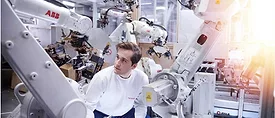
Robots are an important piece of the Industry 4.0 puzzle. Tomorrow's smart factories will depend on new types of machines, such as collaborative and mobile devices that are interconnected. Artificial intelligence (AI), cloud computing and data analytics will also make industrial robots more reliable than ever.
MUNICH—BMW AG sees artificial intelligence (AI) as a way to improve productivity and efficiency at its assembly plants. The automaker is using the technology for a variety of quality-related applications, such as error proofing and inspection tasks.
OYSTER BAY, NY--According to a report by ABI Research, the total installed base of AI-enabled devices in the manufacturing sector will reach 15 million in 2024.
BELMONT, CA—Earlier this month, Volkswagen rolled out its Type 20 concept microbus at its Engineering Center California. The vehicle features parts from the past, as well as those made with AI design software.
Robots and other automation technologies have greatly increased productivity in today's factories. However, they still have one major limitation: They require people to tell them what to do.
KARLSRUHE, Germany—A group of engineers at the Karlsruhe Institute of Technology are using artificial intelligence (AI) technology to develop an agile production system that can autonomously adapt to changing product specifications.
ROCHESTER HILLS, MI—Fanuc, one of the world’s largest makers of industrial robots, is working with Nvidia, a Silicon Valley chipmaker that specializes in artificial intelligence, to add learning capabilities to its products.
WASHINGTON—The National Institute of Standards and Technology is launching a simulation-based competition aimed at making robots more capable, versatile and collaborative, as well as easier to program.