LOS ALTOS, CA—The Toyota Research Institute (TRI) has unveiled a new way to use generative artificial intelligence to help vehicle designers come up with innovative designs more quickly.
TORONTO—Lockheed Martin recently completed a project to evaluate the automation of airframe manufacturing operations using six-axis robots equipped with artificial intelligence technology from Canadian tech startup Xaba.
REGENSBURG, Germany—BMW’s assembly plant here has become the first automotive factory in the world to use an end-to-end digitalized and automated process for inspection, processing and marking of painted vehicle surfaces in standard production.
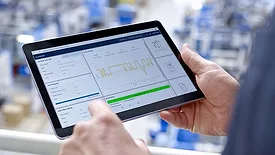
How can manufacturers make the critical transition from data to action? How do they effectively navigate the overabundance of data to pick out what’s meaningful? How do they use these insights to drive overall productivity and efficiency in an automotive context?
The answer to these questions involves deploying a three-tiered IIoT approach that provides automotive OEMs and suppliers with a comprehensive digital roadmap for their operations.
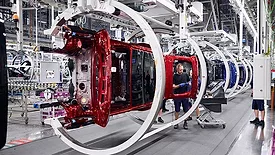
COLOGNE, Germany—Ford Motor Co. flagship European factory here is testing AI-powered automated driving technology designed to enable electric vehicles to drive themselves off the assembly line.
Automated assembly and advanced manufacturing are industry hot topic themes we delve into on our podcast, ASSEMBLY Audible. On a recent ASSEMBLY Audible episode, we connected with celebrated engineer and digital content creator Jousef Murad to discuss where AI fits in the current scope and future of manufacturing.
SAN JOSE, CA—The Moonlight from Flexiv is a new adaptive parallel robot for applications that require precise motion and force control, such as screwdriving, polishing and ultra-accurate loading.
For a product to be assembled successfully, it’s essential to move the right parts, to the right place, in the right orientation, at the right time. Motion control technology makes that happen. Here’s a sampling of the latest technology.
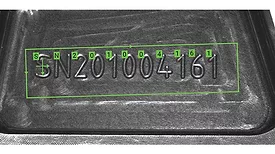
OYSTER BAY, NY—Advances in machine learning technology will help propel sales of smart cameras for machine vision applications to 197 million units and a total value of $35 billion by 2027, according to global technology intelligence firm ABI Research.