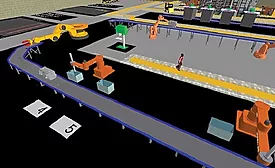
The "father" of the programmable logic controller (PLC), Richard Morley, recently passed away at age 84. After he invented the device 50 years ago, it revolutionized plant floors around the world. The PLC eliminated the need for hard wiring and spurred the development of flexible manufacturing.
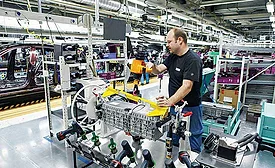
Being the welding equipment supplier for several of the world’s leading automotive OEMs is a big responsibility, but not an impossible one. Hirotec America (HA) is proof of that. Since 1988, the company has provided this equipment to GM, Fiat Chrysler, Ford, Toyota and BMW.
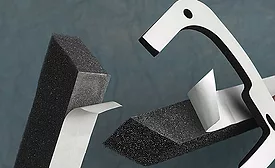
For manufacturers, the product-miniaturization trend is kind of a Catch-22. They know that serving a large and ever-expanding marketplace ensures company growth—so long as their robots can precisely place ever-smaller parts into subassemblies, final assemblies or packaging. Specially designed small grippers and vacuum cups have enabled many manufacturers to achieve both goals.
Historic events make a Major League Baseball (MLB) season memorable. In October 2017, for instance, the Houston Astros won its first World Series championship ever. Several months before that, however, a less-well-known event took place: MLB approved the use of any Whoop Inc. wearable fitness tracker by all players and coaches in games.
For the past several years, the Reshoring Initiative has been helping manufacturers reshore production or keep existing work here through total cost of ownership (TCO) analysis. However, calculating TCO is only part of the overall competitiveness equation.
U.S. manufacturing continued to roll in 2017. Want proof? Look no further than Toyota Motor Corp. In September, the world’s largest automaker announced that it will invest $374 million at five U.S. factories.
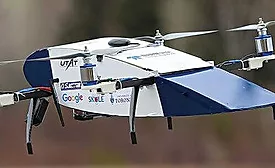
Regardless of whether they are called drones or unmanned aerial vehicles (UAVs), their popularity is increasing among consumers, military leaders and institutions around the world. In fact, analysts at market researcher Teal Group predict that global spending on UAVs will reach $14 billion by 2024.
Manufacturers have known the importance of being discreet since the start of the Industrial Revolution. History has definitely shown this approach to be the best way to safeguard all of a company’s technological, production and assembly secrets.