Robots are being used for a variety of assembly and inspection applications, which is enabling the operation of lean, efficient and automated systems where more than one product type or model can be produced on a single assembly line.
Manufacturing execution systems (MES) are critical elements of Industry 4.0. When all production processes are linked and synchronized with the overall operation, manufacturers have a strategic tool that enables them to improve productivity, streamline costs, boost quality and reduce time to market.
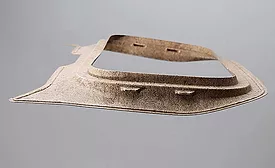
As automakers and suppliers search for new ways to reduce vehicle weight, some engineers are experimenting with natural fibers. Bamboo, cotton, hemp, jute, kenaf, rice and other crops can be used to produce high-strength composite structures for automotive applications.
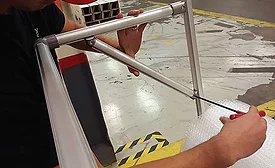
Multiple T-slot framing, pipe-and-joint and square-tube systems let engineers get creative when building workstations, flow racks and other production structures
Lessons learned in childhood often last a lifetime. The same can be said of acquired skills, such as building things with Erector Sets, Legos and Lincoln Logs. Individuals who mastered and enjoyed these classic toys may very likely be the same people who use T-slot extrusion framing, pipe-and-joint and square-tube systems to build modular workstations, flow racks and other production structures for manufacturers.
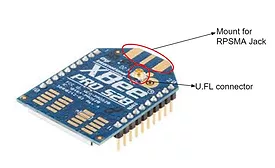
The choice of cable, connector, or antenna relies heavily upon the application.
October 31, 2017
In an increasingly connected world with the introduction of machine-to-machine (M2M) communications, technologies such as Bluetooth, ZigBee, Z-wave, and Wi-Fi have opened up wireless prototyping opportunities not only for major corporations but small businesses and hobbyists.
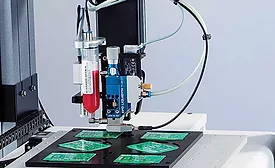
The continuing miniaturization of consumer electronics, medical devices and even automotive components presents challenges for manufacturing, particularly electronics assembly. Surface mount technology, for example, is the dominant process for assembling a wide range of electronic devices.
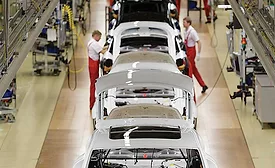
A typical Porsche sports car contains more than 2,000 individual wires. If laid end to end, the wiring would stretch 2 to 3 kilometers. Designing such a complex wiring system would be challenge enough, but at Porsche, almost no harness design in series production matches another one.
U.S. automakers are wrestling with the challenge of reducing vehicle weight to meet the 2025 CAFE (Corporate Average Fuel Economy) mandate, which requires new cars and trucks to achieve 55 miles per gallon. Meeting that challenge will require the latest advances in materials and fastening methods.
Designing a modern diesel engine presents many challenges for engineers. One of the biggest is making sure that each engine component is properly sealed during operation.
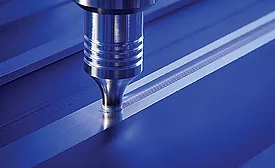
Originally developed for joining aluminum, friction stir welding is now being applied to other materials, including steel, copper, titanium and even nylon.
 RSS
RSS