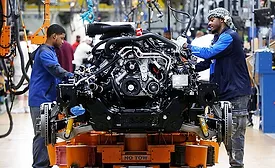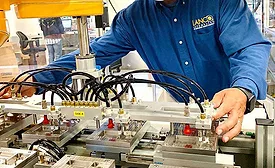

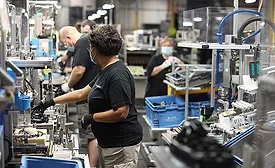
After sitting idle for weeks or even months due to the COVID-19 pandemic, U.S. assembly plants have finally restarted production, albeit with the occasional hiccup.
Growing sustainability and resilience concerns brought about by trade war uncertainty and the COVID-19 pandemic have companies looking for ways to mitigate risk and increase agility.
On July 1, 1930, 200 metal trimmers and polishers at GM’s Fisher Body No.1 (Fisher One) in Flint, MI, laid down their tools and stormed off the job, hollering for others to follow.
Every motorist uses rearview mirrors whenever they get behind the wheel. In fact, most people look at them every few seconds as they drive. However, few ever give those ubiquitous devices much thought.
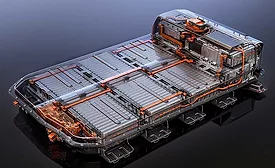
Sales of electric vehicles (EVs), particularly plug-in hybrids and full battery electrics, are growing faster than expected, according to a study released earlier this year by the Boston Consulting Group.
The type of relationship that exists between original equipment manufacturers (OEMs) and maintenance, repair and operations (MRO) suppliers can vary greatly, depending on industry.
A proven project management plan and prompt client feedback are essential for integrators to build fully and semiautomated assembly systems on short deadlines.
Most people would agree that the proverb, "The squeaky wheel gets the grease," is not meant to be taken literally. To them, the expression conveys the idea that the most important problems are the ones most likely to get attention.
Staking is ideal for assembling plastic parts. It's quick and inexpensive. It can join dissimilar materials. It eliminates the cost of fasteners and adhesives, and it allows engineers to loosen the tolerances for molded parts.