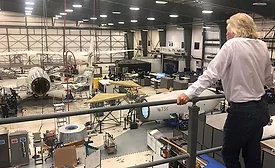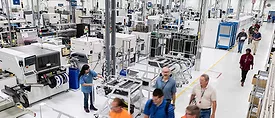
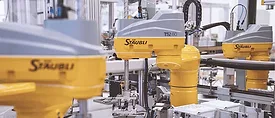
Companies achieve manufacturing excellence when people have the tools they need to produce high-quality work. On the shop floor, this comes about through the marriage of workers and machinery and the refining of processes through constant care and iteration.
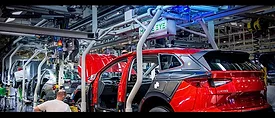
The assembly line in Hall M13 at the ŠKODA plant in Mladá Boleslav is one of the Czech carmaker’s busiest. The best-selling ŠKODA Octavia is assembled here, as is the ŠKODA Enyaq iV electric SUV. Every minute of downtime on this line means losses in the form of unproduced cars.
Today, every car tire is equipped with a wireless pressure sensor that warns drivers of dangerously low pressure levels. Given that there are more than 1.5 billion motor vehicles worldwide, that equates to at least 6 billion pressure sensors.
The innovative medical devices that improve patients’ quality of life require robust materials that meet specific manufacturing and end-use demands. Many medical devices for use in or on the body are assembled from multiple components that need secure and reliable seals. That makes it critical for medical device manufacturers to make the right choice when selecting an adhesive.
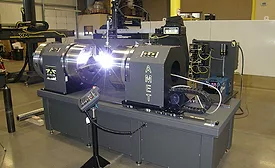
Acommon process for welding thick metal parts is submerged arc welding (SAW). Typically, SAW and other processes require beveling the workpieces to give the torch access to the joint root. The multi-pass process requires high heat input to the weldment and can generate a large heat affected zone (HAZ) along with distortion.
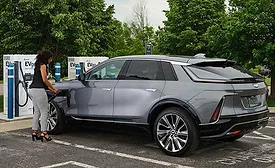
Engineers at Stanford University have developed a new way to make lithium-ion battery packs last longer and suffer less deterioration from fast charging. It could enable electric vehicle batteries to handle more charge cycles and last longer.
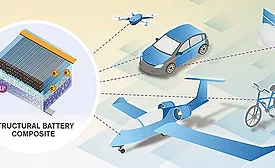
Lightweight batteries will be one of the next big breakthroughs in EV technology. One possibility that intrigues engineers is structural batteries, which can be built into the structure of a vehicle’s body or chassis to fulfill load-bearing needs while producing power.
In recent years, most efforts to develop autonomous vehicles have focused on last-mile delivery, driven by the rapid rise of e-commerce. The goal is to create machines that can deliver food and small packages directly to consumers in an affordable, quick, reliable and safe manner.
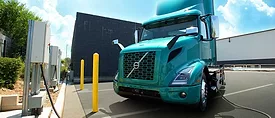
Heavy- and medium-duty trucks are one of the hottest segments of the electric vehicle industry today. Both legacy manufacturers and start-ups are scrambling to develop battery-powered machines. Vehicles are slowly starting to roll off assembly lines, but this new class of truck is expected to dominate the market within the next 15 years.
Assembly lines have been around for more than a century, but new technologies, processes, investments and strategies are accelerating production, increasing capacity and driving revenue growth.