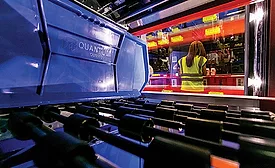
This November marks 10 years that Thermo Fisher Scientific has been manufacturing, storing and delivering essential consumables to life-science researchers worldwide. Workers at Thermo Fisher’s global manufacturing and distribution center in Frederick, MD, fill orders by picking from thousands of unique stock keeping units (SKUs), including many products that must be preserved in a cooler or freezer.
According to the U.S. Bureau of Justice Statistics, 2.3 million people are incarcerated across America. In fact, we have the highest incarceration rate in the world, at 698 per 100,000 of population.
It is too little and too late to keep writing “manufacturing matters.” Everything else in the economy is secondary to manufacturing, mining and farming. Only these activities build wealth.
MBX Systems has had a clearly defined relationship with its independent software vendor (ISV) customers since the day the company opened for business in 1995. For more than 20 years, MBX has focused on designing and manufacturing custom hardware—so the ISVs can focus on developing and selling their software for mass or niche markets. The setup has benefitted both parties.
Traditionally, it has taken months or even years to get equipment to astronauts up in space, depending on the launch re-supply schedule. Zero-gravity 3D printing, however, may soon completely eliminate the need to send parts or equipment to spacecraft.
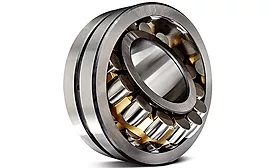
Times were tough for the Timken Co. at the start of the 21st century. In March 2000, the Canton, OH-based manufacturer of antifriction roller bearings and related components announced plans to cut 600 jobs worldwide—after having trimmed 1,700 jobs in the previous two years. It also closed plants in Australia and England, and was relying more heavily on sources of steel outside the United States.
While designing the A350 XWB (extra wide body) airplane in early 2010, Airbus’ engineers proposed a revolutionary way to build the plane’s wings at the company’s plant in Broughton, UK. Specifically, they wanted the wings built horizontally rather than the traditional vertical method.
Carbon-fiber composites offer a variety of advantages for car and truck manufacturers, including lighter weight, better corrosion resistance and higher impact strength than aluminum and steel.
 RSS
RSS