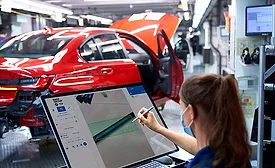
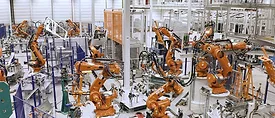
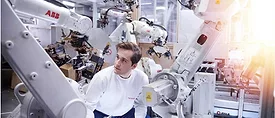
BMW has been at the forefront of Industry 4.0 for years. For example, the company was an early adopter of additive manufacturing, and today prints hundreds of thousands of production parts annually.
Like many long-established car manufacturers, the company that would become Škoda Auto started in the early 1890s by making bicycles. Today, you won’t see velocipedes rolling off of Škoda assembly lines, but you just might see plug-in electric vehicles.
Most manufacturers agree that digital transformation is necessary to remain competitive today and thrive tomorrow. Many large companies have already begun initiatives. But, when asked to quantify the impact of those initiatives on the bottom line, they often come up short.
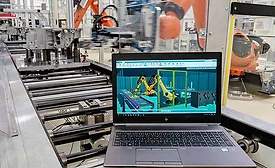
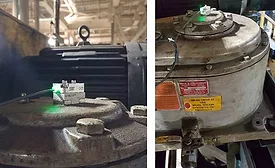
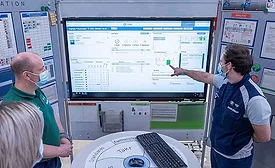
Industry 4.0 is underway. Data analytics, augmented reality, generative design, artificial intelligence, cobots, additive manufacturing and other technologies are already helping manufacturers increase efficiency, lower prices, and improve service, delivery and quality. And there’s more to come.
You must learn to walk before you can run. That aphorism is as true for product assembly as it is for learning how to draw or play golf. Before manufacturers can implement advanced automation technologies, they must first master their parts and processes. This eBook will provide information to help engineers plan for investments and improve their assembly operations before deploying advanced technologies.
Justifying automation has never been easier. The Covid pandemic, coupled with a severe worker shortage, a widening skills gap and the "great resignation," has increased demand for automated guided vehicles, conveyors, robots and other types of equipment.
Greater process control, lower setup costs and simple equipment programming make it easier than ever for manufacturers to build their automation in-house rather than hire a machine builder.
Some questions that manufacturers must address have a simple yes or no answer. Others are not so clear cut. A good example of the latter type is 'Should we build automation in-house?'
That marketers increasingly use robots and automation equipment in their TV ads should come as no surprise. To them, such machinery represents the product they're selling: An automatic and simple push-button solution to the problem consumers are worried about at that moment.
Many people are afraid of snakes and spiders. But, robots and other machines also create anxiety and trepidation in some humans. While Industry 4.0 technology, such as artificial intelligence, augmented reality, collaborative robots, data analytics and digital twins, now make it easier than ever for humans and machines to work in close proximity, fears persist.
 RSS
RSS