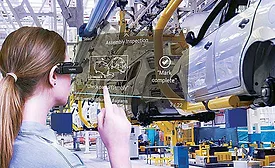
Traditionally, it's not unusual to see people wear goggles and other types of safety glasses in factories. But, a new class of wearable devices is becoming increasingly popular on assembly lines.
Some assembly technologies evolve too fast or too slow, while others change at a pace that's just right. Hydraulic presses belong in the latter category, according to some suppliers, and that's a good thing.
In just a few short years, deep learning software has improved to the point that it can classify images better than any traditional algorithm—and may soon be able to always outperform human inspectors
For many years, pet food manufacturers have used machine vision software to verify the presence of unique characters, codes, colors and graphic shapes on packaging for dog and cat food. Today, however, these companies can complement this process by also verifying the presence of a dog or cat image on the packaging using deep learning vision software.
Myriad automotive components are checked for leaks, including turbochargers, oil filters and radiators. However, leak testing doesn’t end with the suppliers of those components.
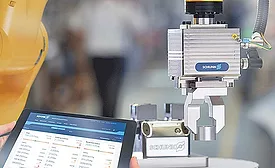
Robots and other automation technologies have greatly increased productivity in today's factories. However, they still have one major limitation: They require people to tell them what to do.
Just as lean manufacturing is about more than eliminating waste, Industry 4.0 is not merely a matter of connecting machines and products via the Internet.
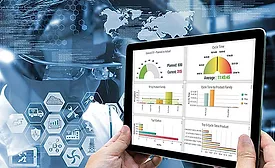
By now, we've all heard the hype: The Industrial Internet of Things (IIoT) will fundamentally change manufacturing and offer a cornucopia of benefits, including increased efficiency, higher quality and more responsive supply chains.
Wire harness assembly doesn't get more complex or safety-critical than in the aerospace industry. A typical harness might contain thousands of wires and hundreds of connectors
So, you're a new engineer freshly out of college. You've been hired at a large OEM to design wire harnesses and wired box assemblies. Not having the proper training in college, you ask yourself, "Where do I start?" The possibilities are limitless.
Ergonomic upgrades are becoming a vital part of many workplaces, and assembly workstations can be especially challenging. According to data from the Occupational Safety and Health Administration, ergonomic issues cost U.S. companies upwards of $54 billion annually, and they account for one-third of workplace absences.
 RSS
RSS