RSS
RSS

Manufacturing Industry Top Stories
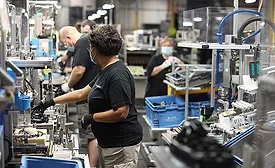
2020 Assembly Plant of the Year: There’s No Looking Back at Murakami
The Campbellsville, KY, plant excels at continuous improvement and workforce development
Read More

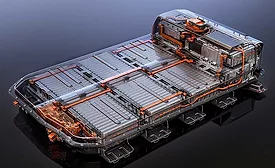
Leak Testing Batteries
A new technology accurately tests cylindrical, prismatic and pouch cells for electric vehicles
Read More

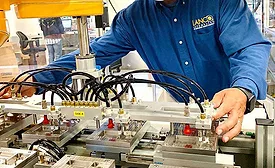
Automated Assembly Systems: Trimming the Timeline
A proven project management plan and prompt client feedback are essential for integrators to build fully and semiautomated assembly systems on short deadlines.
Read More

Staking for Plastic Parts Assembly
New technologies are solving challenges in staking plastic parts
Read More
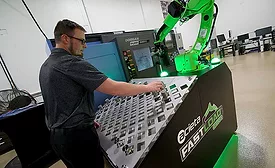
Preconfigured Robot Workcells Enable Ready-to-Go Automation
Standardized, pre-engineered robotics appeal to many types of manufacturers.
Read More

Autonomous Vehicles go Beyond the Blacktop
Autonomous off-highway vehicles are a growing presence around the globe, from Norwegian mines to Brazilian sugar cane fields, and while limited access sites foster more controllable environments, rough and tumble usage raises a host of other challenges.
Read More

Accelerating electric drive
Navigant says that plug-in electric vehicle sales last year doubled in North America, and sales in Europe and China increased 39% and 77%, respectively. And by 2030, annual PEV sales are estimated to be between 15% and 32% of the global light-duty vehicle market.
Read More