The manufacturing industry is evolving due to Artificial Intelligence (AI) and robotics, significantly impacting job outlooks, as highlighted by the U.S. Bureau of Labor Statistics. This article will explore quality trends and provide guidance for future changes.
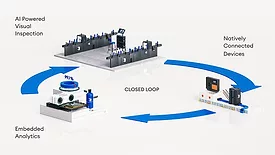
The combination of closed loop quality systems and AI-driven machine vision is transforming manufacturing by enabling real-time adjustments and proactive problem-solving.
AI is profoundly reshaping manufacturing, enabling businesses to achieve higher quality standards, greater operational efficiency and more imaginative resource utilization.
AI-powered predictive maintenance helps anticipate machine failures, allowing for proactive action that saves time and costs. According to a Deloitte study, 86% of manufacturing executives believe that AI and intelligent technologies will enhance competitiveness in the next five years.
Machine vision is vital for industrial automation, providing essential image analysis amid labor shortages. Effective implementation relies on precise lighting to ensure high-quality images, with different applications requiring specific setups, such as backlights for measurements and line scan lights for fast-moving materials.
Engineers at the University of Virginia (UVA) have created a more efficient way to optimize manufacturing systems, improving both speed and quality while reducing waste.
A poll asked Koreans what they would prefer to be: an automotive assembler with a high school degree earning a good salary or an office worker with a liberal arts degree earning less. Some 76 percent chose the automotive job.
 RSS
RSS