Austin has been senior editor for ASSEMBLY Magazine since September 1999. He has more than 25 years of b-to-b publishing experience and has written about a wide variety of manufacturing and engineering topics. Austin is a native of Chicago and a graduate of the University of Michigan.
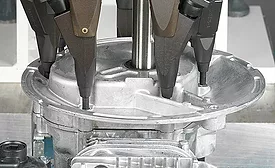
Sooner or later, most manufacturers need to consider investing in automatic screwdriving equipment. If an assembly calls for multiple screws of the same size, an autofeed screwdriver is an easy way to boost accuracy, productivity and quality.
For the past decade, carbon-fiber composites have been the darling of the aerospace sector, receiving countless praise and widespread attention. Reinforced polymers have dramatically changed the way that many types of airframes are designed and built.
The Industrial Internet of Things (IIoT) is more than just the latest manufacturing fad. It promises to transform the way that many types of products are designed, assembled and serviced.
The ability to collaborate is vital to a successful career in just about any profession. That's why Bradley University is focusing on projects that enable students majoring in either business or engineering to work together.
Like a third-string quarterback awaiting his moment in the spotlight, magnesium has been sitting patiently on the light-weighting sideline. But, it may finally get its turn to shine in automotive applications, thanks to several recent breakthroughs.
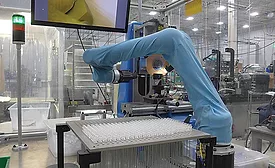
Needles are one of the most basic and least glamorous types of medical devices. But, every day, doctors and nurses rely on "sharps" to administer medicine, draw blood, conduct biopsies and perform many other vital medical procedures.
The "father" of the programmable logic controller (PLC), Richard Morley, recently passed away at age 84. After he invented the device 50 years ago, it revolutionized plant floors around the world. The PLC eliminated the need for hard wiring and spurred the development of flexible manufacturing.
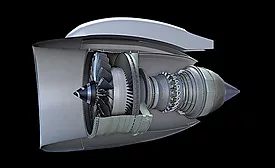
As aerospace engineers attempt to create products that can fly faster, higher and more efficiently, new types of materials are essential. Ceramic matrix composites (CMCs) hold tremendous promise. However, they can be difficult to join.
Manufacturing execution systems (MES) are critical elements of Industry 4.0. When all production processes are linked and synchronized with the overall operation, manufacturers have a strategic tool that enables them to improve productivity, streamline costs, boost quality and reduce time to market.