Robotics
Robots and AI Help Archaeologists Restore Ancient Roman Artwork
"It's like trying to solve a giant jigsaw puzzle with missing pieces and no reference image."
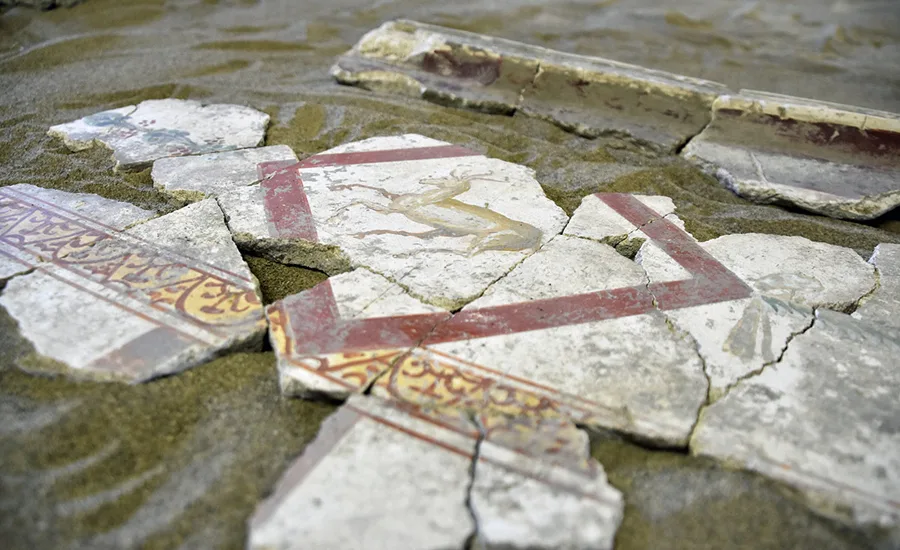
Reassembling a shattered fresco is like trying to solve a giant jigsaw puzzle with missing pieces and no reference image. Photo courtesy University of Venice
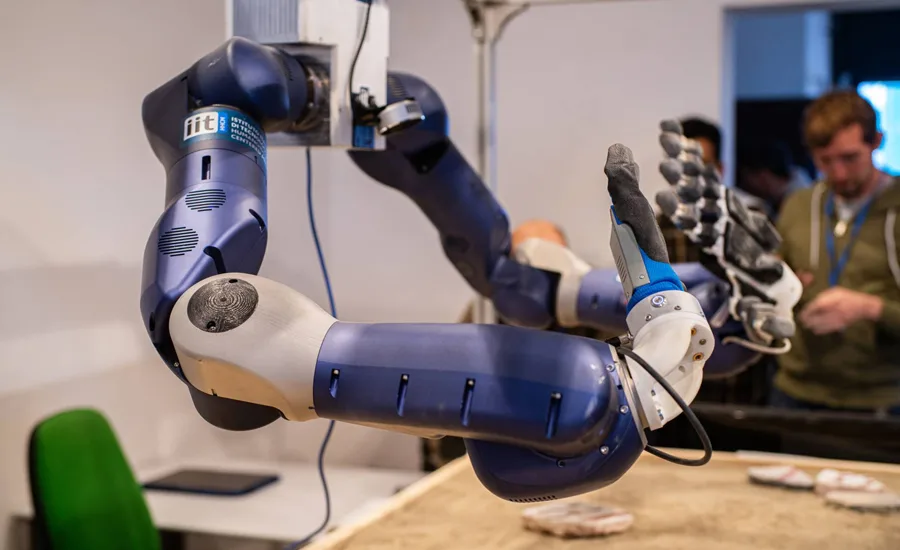
The system consists of two robotic arms equipped with soft, flexible hands in two sizes. Photo courtesy University of Venice
POMPEII, Italy—Pompeii’s ancient Roman frescoes, shattered and buried for centuries, could get a second life thanks to a pioneering robotic assembly system designed to support archaeologists in one of their most painstaking tasks: restoring fragmented artefacts.
Developed under an EU-funded project called RePAIR, the technology combines advanced image recognition, AI-driven puzzle-solving, and ultra-precise robotic hands to accelerate traditionally slow and often frustrating restoration work.
Located near Naples, the once-thriving city of Pompeii and its surrounding countryside were submerged by volcanic ash when Mount Vesuvius exploded in A.D. 79. Ironically, the eruption preserved much of the city, even as it killed thousands of people.
Among the site’s most treasured items are the original frescos inside homes and businesses. Although some frescos are still on the walls, others are in a fragmentary state. Archaeologists want to reassemble the paintings and restore them to their former glory.
The process is not easy. “It’s like you buy four or five jigsaw puzzles. You mix everything together, then you throw away the boxes and try to solve four or five puzzles at the same time,” said Marcello Pelillo, Ph.D., a professor of computer science at the University of Venice and the coordinator of the robotic project.
The system consists of two robotic arms equipped with soft, flexible hands in two sizes. The hands can grip and assemble fragments without damaging their delicate surfaces. Vision systems identify specific fragments.
Experts in artificial intelligence and machine learning developed algorithms to reconstruct the frescoes, matching colors and patterns that may not be visible to the human eye. Experts say the task is similar to solving a giant jigsaw puzzle, with extra difficulties such as missing pieces and no reference image of the final result.
After acquiring and digitizing images of the individual fragments, the system attempts to solve the puzzle, at times engaging with archaeologists who can identify errors or offer suggestions. If the system identifies a match, it directs the robots to position the fragments in the desired locations.Looking for quick answers on assembly and manufacturing topics? Try Ask ASM, our new smart AI search tool. Ask ASM
Looking for a reprint of this article?
From high-res PDFs to custom plaques, order your copy today!