Assembly Magazine logo
search
Ask ASSEMBLY AI
cart
facebook twitter linkedin youtube
  • Sign In
  • Create Account
  • Sign Out
  • My Account
Assembly Magazine logo
  • TRENDS
    • Ask ASSEMBLY AI
    • Trends
    • News
    • New Products
  • INDUSTRIES
    • Aerospace
    • Appliance
    • DFMA Assembly
    • Medical Devices
    • Green Manufacturing
    • Lean Manufacturing
    • Machinery Assembly
    • Electronics Assembly
    • Automotive
  • TECHNOLOGIES
    • Adhesives & Dispensing
    • Assembly Presses
    • Automated Assembly Systems
    • Manufacturing Management
    • Manufacturing Software
    • Motion Control
    • Screwdriving & Riveting
    • Robotics
    • Test & Inspection
    • Plastics & Metal Welding
    • Wire Processing
    • Workstations
  • AUTONOMOUS & ELECTRIC MOBILITY
    • AEM Magazine Archives
    • Autonomy
    • Electrification
    • Mobility Services
    • Assembly & Testing
    • AV/EM News
  • MEDIA
    • Ask ASSEMBLY AI
    • Podcasts
    • Assembly News Now
    • Assembly TV
    • Webinars
    • eBooks
  • EVENTS
    • Calendar
    • The ASSEMBLY Show
  • MORE
    • Exclusives >
      • Plant of the Year
      • Capital Spending
    • Buyers Guide >
      • Supplier Insights
    • Classifieds
    • Featured Products
    • Newsletters
    • Store
    • White Papers
    • Columns
    • Sponsor Insights
  • INFOCENTER
    • Assembly & Test Solutions
  • EMAGAZINE
    • eMagazine
    • Archive Issues
    • Advertise
    • Contact Us
    • Sign Up
IndustriesColumnsMedical Devices AssemblyThe Editorial

From the Editor

The Pandemic Has Taught Us Nothing
By John Sprovieri
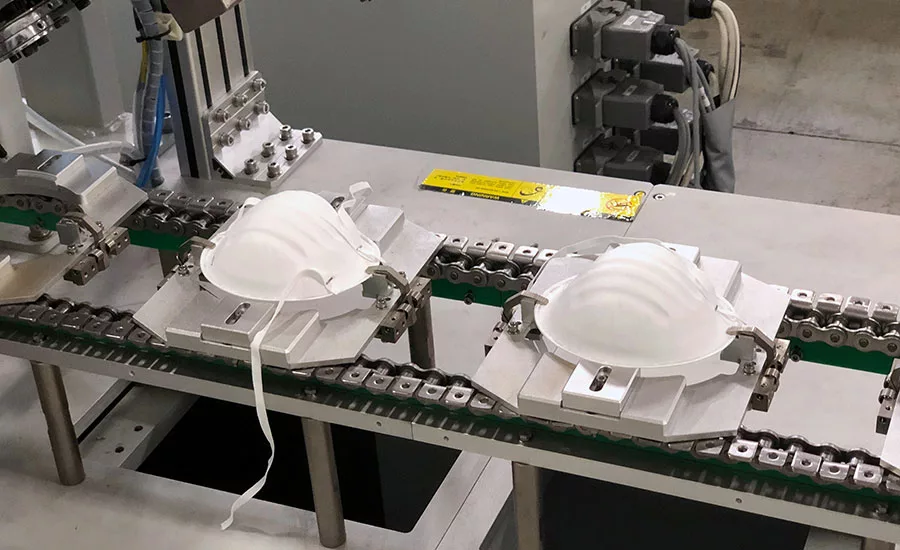
PPE and other medical products

Despite calls for reshoring production of PPE and other medical products, U.S. healthcare providers continue to rely on cheap imports from China.
Photo courtesy United Safety Tech

July 11, 2024

Note to the U.S. healthcare industry: Heed the words of Spanish-American writer and philosopher George Santayana: “Those who cannot remember the past are condemned to repeat it.”

Hard to believe, but it’s been more than four years since the World Health Organization (WHO) declared the COVID-19 pandemic an international public health emergency on Jan. 30, 2020. (The WHO officially ended the emergency May 5, 2023, though the disease is still very much with us. As of May 29, 2024, the pandemic has caused 7,049,376 confirmed deaths worldwide, making it the fifth-deadliest pandemic or epidemic in history.)

We don’t think too much about COVID now, but four years ago, it wreaked havoc on U.S. manufacturing supply chains. Every industry was affected to some degree, but none was hit harder than the healthcare industry. Remember the shortages of personal protective equipment (PPE)? You couldn’t find N95 masks anywhere. Crafters began sewing face masks for loved ones. Near me, a local distillery began making hand sanitizer from gin by-products. (It was revolting!)

Rather than grouse about government-imposed lockdowns, manufacturers stepped up to fight the disease and help healthcare workers and first responders. For example, Ford Motor Co. joined forces with 3M and GE Healthcare to expand production of urgently needed medical equipment and supplies. The automaker developed a plan to assemble more than 100,000 face shields per week and harness its additive manufacturing expertise to produce components. A Ford assembly plant in Ypsilanti, MI, was quickly converted to produce ventilators.

In the aftermath, business leaders and public officials realized that outsourcing entire industries and product groupings might not be the best way to go. The federal government took note of this vulnerability and attempted to improve future readiness. In late 2020, the Department of Health and Human Services leveraged the Administration for Strategic Preparedness & Response to establish an “Industrial Base Expansion Portfolio.” This platform provided seed investments to some 60 companies across the following categories:

  • PPE and raw materials ($1.2 billion).
  • Therapeutic supplies and materials ($272 million).
  • Vaccine supplies and materials ($213 million).
  • Testing capacity and materials ($2 billion).

These investments were intended to kick-start reshoring and expand manufacturing capacity to ensure at least a nominal amount of domestic production for critical medical supplies for future pandemic-like events or supply chain disruptions. In addition to initial government investments, a sizable amount of activity was mirrored by the private sector to establish manufacturing capabilities and reduce reliance on imports.

Early momentum was promising, and there was an increase in reshoring and near-shoring for critical medical products. The goal was to solidify a nominal domestic production base that could be relied upon in times of greater need rather than to completely replace high-volume imported goods.

Looking for quick answers on assembly and manufacturing topics? Try Ask ASM, our new smart AI search tool. Ask ASM →

Alas, according to a new, eye-opening report from the American Medical Manufacturers Association (AMMA), the early enthusiasm for reshoring and domestic supply chains has vanished. Most commercial healthcare buyers have fully reverted to the pre-pandemic model of purchasing low-cost imports that primarily originate from Southeast Asia.

Take gloves, for example. The U.S. consumes approximately 120 billion nitrile gloves annually. There is no significant domestic production of nitrile gloves currently, and approximately 98 percent are imported each year. Gloves were one of the scarcest PPE items during the height of the pandemic. Historically, the largest manufacturer of gloves was Malaysia, which controlled about 70 percent of the global market. China was a nominal player, but it invested significantly during the early stages of the pandemic to expand production and increase market share. Now, China is the dominant supplier of nitrile gloves to the U.S.

It’s the same story with N95 masks. In immediate aftermath of the pandemic, U.S. healthcare providers diversified their supply chains, purchasing larger amounts of masks from Mexico and other countries. That did not last. Today, China supplies 90 percent of N95 masks in the U.S.

For domestic manufacturing of PPE and other medical products to gain traction, additional support from the federal government is needed, according to the AMMA report. Support could come in the form of long-term purchase orders, additional support funding, tighter requirements to buy domestically made products, or increased tariffs against foreign-made goods. If support is not deployed soon, the emerging domestic supply chain for PPE will likely disappear as quickly as it formed.

See more articles from our July 2024 issue!

KEYWORDS: made in the USA near-shoring reshoring

Share This Story

Looking for a reprint of this article?
From high-res PDFs to custom plaques, order your copy today!

John has been with ASSEMBLY magazine since February 1997. John was formerly with a national medical news magazine, and has written for Pathology Today and the Green Bay Press-Gazette. John holds a B.A. in journalism from Northwestern University, Medill School of Journalism.

Recommended Content

JOIN TODAY
To unlock your recommendations.

Already have an account? Sign In

  • Made in the U.S.A.

    Consumer Products Manufacturing: Made in the USA

    Supply chain lessons learned during the coronavirus...
    Automated Assembly Systems
    By: Austin Weber
  • Best Practices for Press-Fit Assembly

    Best Practices for Press-Fit Assembly

    In manufacturing, ironclad formulas for success are hard...
    Assembly Presses
    By: Jim Camillo
  • aem0523leader-tesla1.jpg

    Tesla Rethinks the Assembly Line

    Engineers at Tesla Inc. have developed a new process that...
    Automotive Assembly
    By: Austin Weber
Manage My Account
  • eMagazine Subscription
  • Assembly Newsletters
  • Online Registration
  • Subscription Customer Service
  • Manage My Preferences

More Videos

Sponsored Content

Sponsored Content is a special paid section where industry companies provide high quality, objective, non-commercial content around topics of interest to the ASSEMBLY audience. All Sponsored Content is supplied by the advertising company and any opinions expressed in this article are those of the author and not necessarily reflect the views of ASSEMBLY or its parent company, BNP Media. Interested in participating in our Sponsored Content section? Contact your local rep!

close
  • ultrasonic welding
    Sponsored bySonobond Ultrasonics

    Engineering Efficiency in High-Performance Assembly: How Ultrasonic Welding Enhances Throughput, Reliability and Quality

  • UV curing system
    Sponsored byDymax

    Why UV Intensity Alone Doesn’t Define Curing Performance

  • wooden pallets
    Sponsored byLEAN Manufacturing Products

    Eliminating Waste on the Shop Floor: Applying Lean Principles to Improve Manufacturing Efficiency

Popular Stories

ASSEMBLY News Now, episode-30: Volvo Redesigns EV Manufacturing

Volvo Redesigns EV Manufacturing

Boeing CEO Kelly Ortberg announces 1 billion investment

Boeing Plans $1 Billion Wichita Investment, Workforce Training Center

GE Appliances Worker on Line

GE Appliances Expands Factory AI With 800 Gemini Enterprise Agents

Watch the latest episode of ANN now!

Events

July 24, 2025

From Shop Floor to CFO: How Manufacturers Are Closing the Loop Between Operations and Finance

On Demand Learn how manufacturers are bridging the gap between the shop floor and ERP systems to gain real-time visibility, streamline operations, and kick-start digital transformation—without waiting years.

Sponsored by:

PicoStratusGreen
July 30, 2025

Buffer Analysis and Design Fundamentals for Manufacturing Excellence

On Demand In this presentation, Dr. Herman Tang shares practical insights from his industry experience and research on buffer management in manufacturing operations.

View All Submit An Event

Poll

Difficult Assembly Processes

Which assembly process gives you the most difficulty?
View Results Poll Archive

Products

Manufacturing Cost Policy Deployment (MCPD) Profitability Scenarios: Systematic and Systemic Improvement of Manufacturing Costs

Manufacturing Cost Policy Deployment (MCPD) Profitability Scenarios: Systematic and Systemic Improvement of Manufacturing Costs

See More Products
Register for webinar - Modernizing Automotive Assembly: Why Upgrading Legacy MES is a Business Imperative

Related Articles

  • sony-2019.jpg

    How GE Aerospace's Plant in Greenville Used Lean to Produce a New High-Pressure Turbine Blade During the Pandemic

    See More
  • Pandemic Spurs Review of Manufacturing Supply Chains

    See More
  • Pandemic Disrupts U.S. Manufacturing

    See More

Related Products

See More Products
  • handbook of digital.jpg

    Handbook of Digital Innovation, Transformation, and Sustainable Development in a Post-Pandemic Era

  • The First Snap-Fit Handbook 2e: Creating and Managing Attachments for Plastics Parts

  • history.jpg

    Faster, Better, Cheaper in the History of Manufacturing: From the Stone Age to Lean Manufacturing and Beyond

See More Products

Related Directories

  • HA Industries

  • CSP US Inc.

    As a software manufacturer, CSP has been offering high-quality QMS solutions for quality assurance and archiving for over 30 years. Our solutions help you minimize production errors and master compliance requirements with confidence. The CSP suite enables transparency and control in quality management and is the platform for zero-defect production.
×

Never miss the latest news and trends driving the manufacturing industry

Stay in the know on the latest assembly trends.

JOIN TODAY!
  • RESOURCES
    • Advertise
    • Contact Us
    • Directories
    • Manufacturing Division
    • Store
    • Want More?
  • SIGN UP TODAY
    • Create Account
    • eMagazine
    • Newsletters
    • Customer Service
    • Manage Preferences
  • SERVICES
    • Marketing Services
    • Reprints
    • Market Research
    • List Rental
    • Survey/Respondent Access
  • STAY CONNECTED
    • LinkedIn
    • Facebook
    • Instagram
    • YouTube
    • X (Twitter)
  • PRIVACY
    • PRIVACY POLICY
    • TERMS & CONDITIONS
    • DO NOT SELL MY PERSONAL INFORMATION
    • PRIVACY REQUEST
    • ACCESSIBILITY

Copyright ©2026. All Rights Reserved BNP Media, Inc. and BNP Media II, LLC.

Design, CMS, Hosting & Web Development :: ePublishing