Wearable Tech Is Focus of Rice Research Project
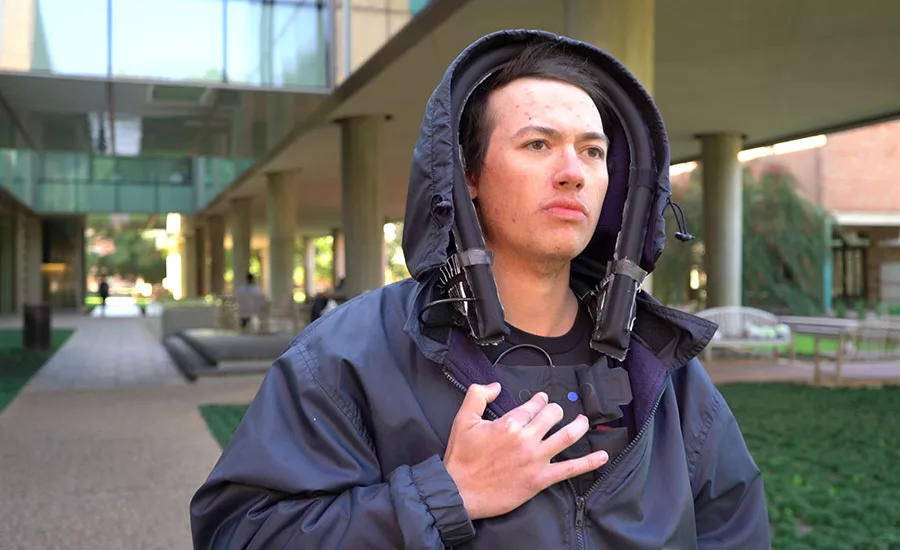
Sheet-based fluidic technology can be used in wearable devices and smart clothing such as hoods.
Photo courtesy Rice University
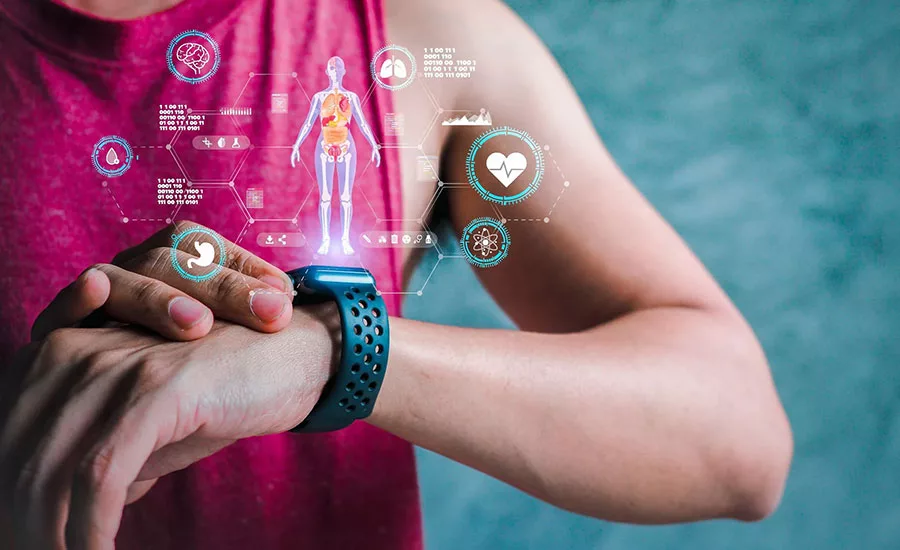
Watches and other wearable devices provide an easy way to monitor a variety of health conditions.
Illustration courtesy TDK Corp.
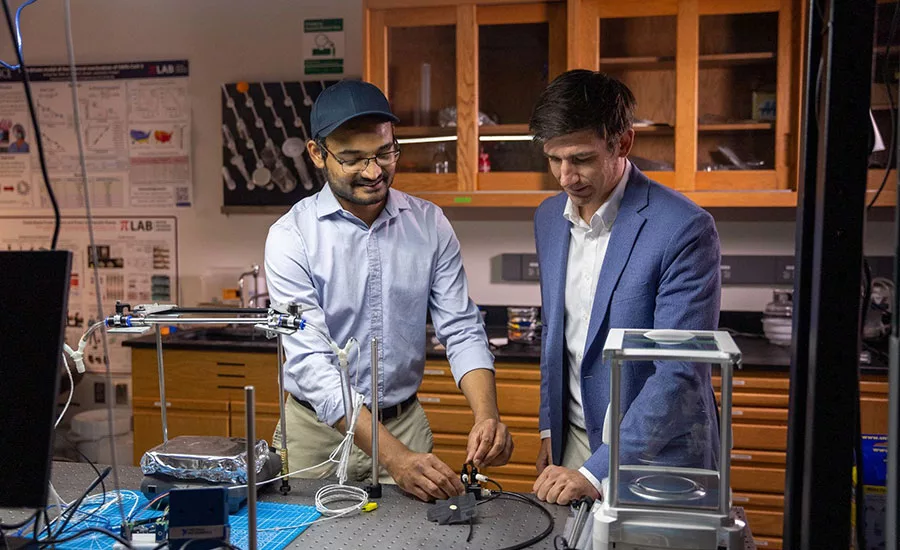
Engineers at Rice University are developing next-generation wearables that are smarter, lighter weight and more flexible than current devices.
Photo courtesy Rice University
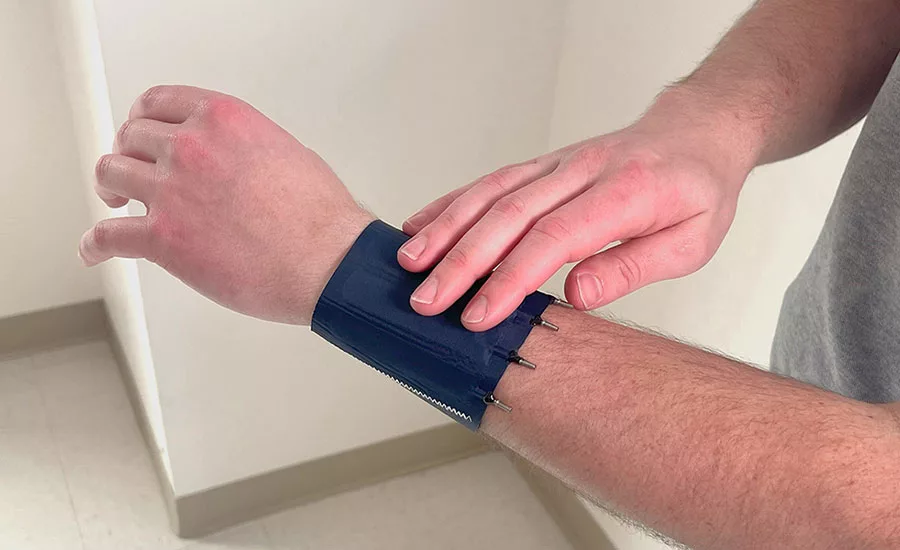
This wearable sleeve is made out of flexible smart fabrics embedded with sensors.
Photo courtesy Rice University
Wearable devices are used by world-class athletes training for the Olympics, 90-year-old heart patients and weekend golfers. They provide an easy way to monitor a variety of health and wellness conditions, such as blood pressure, breathing rates, calorie burn, cholesterol levels, glucose levels, heart rates, oxygen levels, sleep patterns and water intake.
Wearable hardware comes in a variety of shapes and sizes. It includes bracelets, gloves, hoods, patches, rings and sleeves, plus glasses, helmets, pendants, shoes, watches and wristbands.
Engineers at Rice University are developing next-generation devices that are smarter, lighter weight and more flexible than current alternatives. They’re focusing on sheet-based fluidic technology.
“Fluidically driven sheet-based devices have emerged as a promising technology for soft and wearable [devices], because they represent a flexible and lightweight means to interact with both the environment and human users,” says Daniel Preston, Ph.D., assistant professor of mechanical engineering at Rice University.
“We create these sheet-based devices with internal structures, including channels for flow and expanding pouches for actuation,” notes Preston. “[We define] these regions by controlling where the sheets—including plastics and textiles—bond to each other during fabrication.
“Sheet-based devices can provide actuation, sensing and even embedded computation in wearables without the need for rigid electronic components,” explains Preston. “They are safe and adaptable for interacting with humans in dynamic environments.
“Sheet-based devices can be embedded into wearable assistive technology, which provides safe and adaptive support for individuals with mobility impairments,” Preston points out. “By embedding intelligence into these devices, we can enable different actions with a single pressure input, simplifying the designs of these wearable technologies and reducing the need for bulky electronic controls.”
Looking for quick answers on assembly and manufacturing topics? Try Ask ASM, our new smart AI search tool. Ask ASM
Preston and his colleagues are exploring how programmed failure in heat-sealable, sheet-based systems can be used to protect devices, enable complex sequencing of actions and even streamline control mechanisms.
“Put simply, we are making soft, flexible machines smarter by designing their internal components to fail intentionally in a well-understood manner,” says Preston. “In doing so, the resulting systems can recover from pressure surges and even complete multiple tasks using a single control input.”
The research is focusing on how thin, flexible sheets can be patterned and selectively bonded to form internal fluidic networks that respond to pressure changes. Specifically, the engineers want to learn how these networks fail when internal pressures get too high. By studying adhesion between textile sheets, they have been able to predict maximum operating pressures and determine how factors like bond geometry and material selection impact performance.
“Our study provides a framework for predicting and leveraging failure in sheet-based fluidic systems,” says Sofia Urbina, a second-year doctoral student in Preston’s lab who has been working on the R&D project. “Rather than seeing failure as a limitation, we explored how it can be used to enhance functionality, making these devices more intelligent and efficient.”
Through rigorous testing, including T-peel tests to evaluate adhesion strength and burst tests to assess failure at elevated pressures, the Rice engineers identified three distinct failure regimes dictated by the thermal bonding step of the manufacturing process: an initial phase where bond strength increases with bonding temperature, a plateau where material strength dictates cohesive failure, and a third phase where overheating during fabrication degrades material integrity.
“Sheet-based devices often fail at high pressures, and the failure of these devices has remained relatively unexplored,” explains Urbina. “By characterizing the bond strength of heat-sealable textile sheets, we were able to develop a robust understanding of pressure-driven delamination to predict failure in these sheet-based systems.
“We leveraged this understanding of failure to develop devices with protection from overpressurization, sequencing of multiple actions, and selection between various operating modes, all without any onboard electronic control,” says Urbina.
“The choice of materials can limit the maximum operating pressures of these sheet-based devices, because if the adhesion is strong enough, the material itself will fail before the bonded region does,” adds Preston. “This behavior is analogous to sticking an adhesive hook on your wall, where even if the adhesive is incredibly strong, the wall itself must also be able to support the weight of any objects suspended from the hook.”
Preston and his colleagues have conducted a variety of T-peel tests to evaluate adhesion strength. The goal was to evaluate the effect of bonding temperature on bond strength of the material.
“We identified three distinct failure regimes,” explains Urbina. “First, at low bonding temperatures, adhesive failure occurs with delamination between the bonded sheets. Then, at intermediate temperatures, a cohesive failure regime sees the bond strength plateau with failure consisting of tearing of the constituent sheets themselves.
“Finally, at high temperatures, thermal degradation occurs with bond strength decreasing and failure remaining cohesive,” Urbina points out. “T-peel tests allow us to quantify bond strength and compare it with device-scale burst tests to determine the maximum operating pressures of these sheet-based devices.
“We also performed restrained burst tests to corroborate the temperature dependency of pouch burst strength, as well as unrestrained burst tests to better simulate a heat-sealable sheet-based device under typical operating conditions,” says Urbina. “For both tests, we increased the pressure at a constant quasi-static rate using an electronic regulator while recording the pressure at the pouch inlet.”
Pouches were bonded at different temperatures to test the temperature dependency of the pouch burst strength. Two metal plates confined the pouch as it was being pressurized to separate the effects of pouch size and geometry in the restrained tests.
These findings enable Preston and his colleagues to create a “fluidic fuse.” The protective component relies on multiple bonds with different strengths and is designed to fail in a controlled manner to prevent damage from pressure spikes.
“Think of it like an electrical fuse,” says Preston. “When the pressure exceeds a set limit, the fuse ‘blows,’ preventing catastrophic damage to the entire system. This fluidic fuse can be easily replaced or even rebonded for reuse.
“By programming when and where failure occurs, we can create devices that ‘fail’ their way into new operating modes, performing multiple tasks without needing additional control inputs,” explains Preston.
“Our research shows that failure can be an asset rather than a liability,” claims Preston. “We use failure intentionally to design sheet-based devices with embodied intelligence. Programming when and where failure will occur enables these devices to perform multiple tasks or select between different operating modes with a single pressure input.
“When used to select between different actions, new pathways within the device open to make fluidic connections,” says Preston. “These pathways remain open due to pressure-based delamination, so the system would need to be thermally bonded together again before it could be reconfigured for a different use case. The thermal bonding process is currently as simple as using a hot clothing iron, but in our future work, we plan to develop methods that make resetting the configuration even easier.
“The applications for these findings extend far beyond the lab,” notes Preston. “In wearable technology, fluidic networks could be embedded into clothing, offering adaptive support for rehabilitation patients, assisting individuals with mobility impairments, and even communicating with our sense of touch. In robotics, the ability to sequence actions with a single input could simplify the design of multifunctional autonomous systems, reducing the need for complex electronic control mechanisms.
“We have several patents pending on this work, and on related fluidic logic and control approaches,” adds Preston. “A company focused on commercialization of these wearable devices, Actile Technologies, has recently spun out of our lab. We are working to make our wearable devices available to users as soon as possible.”
Looking for a reprint of this article?
From high-res PDFs to custom plaques, order your copy today!