Automotive Industry
Truck Manufacturer Recycles Sand From Casting Operations
This year, Scania will divert some 20,000 tons of used sand from landfills.
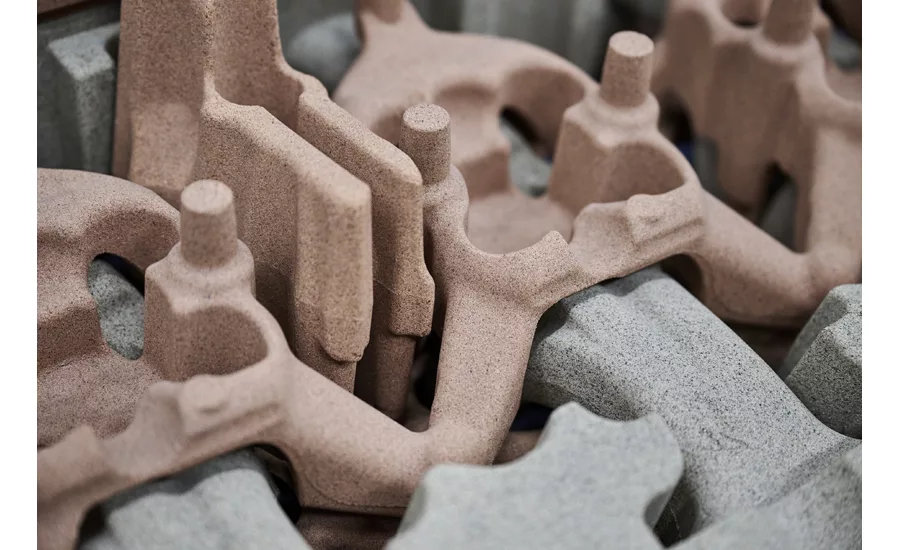
SÖDERTÄLJE, Sweden—Truck manufacturer Scania is recycling the sand from metal casting operations, providing it to a manufacturer of building materials so it can be turned into mortar.
Sand casting is a versatile process used in numerous industries to produce a wide range of metal components. Its ability to create complex shapes and adapt to various materials and sizes makes it cost-effective for many manufacturing needs. In the automotive industry, the process is used to make engine blocks, cylinder heads, transmission cases and other engine components.
There are four main components for making a sand casting mold: base sand, a binder, additives, and a parting compound. After casting, the mold is broken down, the casting is removed, and the sand is then cleaned and prepared for reuse. Used sand can typically be reused multiple times before it becomes unsuitable for casting. After numerous cycles, the sand is often sent to landfills.
Scania is trying to change that. Instead of sending its used sand to a landfill, the truck manufacturer is providing it to Weber Saint-Gobain for use in making mortar for masonry constructions. Weber’s products are primarily composed of natural aggregates, namely virgin sand and gravel. Since these resources are accessible but finite, Weber has long been pursuing substitutes for virgin sand to for its products.
The arrangement with Scania is a win-win for both companies. “To be efficient with the limited resources we have on Earth, and prolong their lifespan, is a way to lessen our impact on the environment,” says Fredrik Nilzén, head of sustainability at Scania.
This year, Scania will transport some 20,000 tons of sand 150 kilometers from its factory in Södertälje to Weber’s factory in Vingåker. That’s three fully loaded trucks every day.
The arrangement means less virgin sand has to be extracted. “With the sand from Scania, we lessen the use of virgin sand by 30 percent and the potential is even greater. Our goal is to substitute all the virgin sand in our products with alternative aggregates by 2035,” says Anders Anderberg, R&D director at Weber Saint-Gobain.Looking for quick answers on assembly and manufacturing topics? Try Ask ASM, our new smart AI search tool. Ask ASM
Looking for a reprint of this article?
From high-res PDFs to custom plaques, order your copy today!