Assembly Magazine logo
search
Ask ASSEMBLY AI
cart
facebook twitter linkedin youtube
  • Sign In
  • Create Account
  • Sign Out
  • My Account
Assembly Magazine logo
  • TRENDS
    • Ask ASSEMBLY AI
    • Trends
    • News
    • New Products
  • INDUSTRIES
    • Aerospace
    • Appliance
    • DFMA Assembly
    • Medical Devices
    • Green Manufacturing
    • Lean Manufacturing
    • Machinery Assembly
    • Electronics Assembly
    • Automotive
  • TECHNOLOGIES
    • Adhesives & Dispensing
    • Assembly Presses
    • Automated Assembly Systems
    • Manufacturing Management
    • Manufacturing Software
    • Motion Control
    • Screwdriving & Riveting
    • Robotics
    • Test & Inspection
    • Plastics & Metal Welding
    • Wire Processing
    • Workstations
  • AUTONOMOUS & ELECTRIC MOBILITY
    • AEM Magazine Archives
    • Autonomy
    • Electrification
    • Mobility Services
    • Assembly & Testing
    • AV/EM News
  • MEDIA
    • Ask ASSEMBLY AI
    • Podcasts
    • Assembly News Now
    • Assembly TV
    • Webinars
    • eBooks
  • EVENTS
    • Calendar
    • The ASSEMBLY Show
  • MORE
    • Exclusives >
      • Plant of the Year
      • Capital Spending
    • Buyers Guide >
      • Supplier Insights
    • Classifieds
    • Featured Products
    • Newsletters
    • Store
    • White Papers
    • Columns
    • Sponsor Insights
  • INFOCENTER
    • Assembly & Test Solutions
  • EMAGAZINE
    • eMagazine
    • Archive Issues
    • Advertise
    • Contact Us
    • Sign Up
Assembly Breaking News Automotive AssemblyScrewdriving and Riveting AssemblyPlastics & Metal Welding AssemblyAssembly and TestingElectrification

Metal Welding

Ultrasonic Welding Joins Copper Sleeves to Aluminum Bus Bars

New technique allows ultrasonic welding to be applied to new aluminum alloys.
copper sleeve to aluminum bus bar
Application_Metal_179.tif
September 10, 2024

If the battery pack is the heart of an electric vehicle, then bus bars are its blood vessels. Their role is to conduct electrical current to the vehicle’s motors, lights, displays and other components.

Bus bars are solid metal bars used to carry current. Typically made from copper or aluminum, bus bars are rigid and flat—wider than cables but up to 70 percent shorter in height. They may be plated with gold or silver to improve their conduction capabilities.

Bus bars are popular with EV manufacturers for several reasons. For one thing, they save space. Bus bars do not sit as high as cables do. They can also be formed at angles more tightly and more precisely than a cable can bend, fitting closely to vehicle profiles.

Another factor is automation. Even though many automotive assembly tasks have become automated, installing wiring continues to be a largely manual task. Robots have difficulty handling and positioning flexible cables, but they can easily pick and place a rigid bus bar.

Finally, bus bars carry more current. A bus bar can support up to 15 percent more power than a cable with the same cross-sectional area. In addition, the larger surface area of a bus bar dissipates heat more efficiently than a cable over its entire length.

One of the leading manufacturers of bus bars is the Kern-Liebers Group. Based in Schramberg, Germany, Kern-Liebers specializes in the production of complex strip and wire parts and assemblies.

Kern-Liebers has pioneered an inline technique to coat aluminum bus bars with silver. This obviates the need to send bus bars to an outside supplier for coating, which saves time and money. 

Looking for quick answers on assembly and manufacturing topics? Try Ask ASM, our new smart AI search tool. Ask ASM →

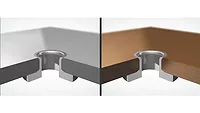
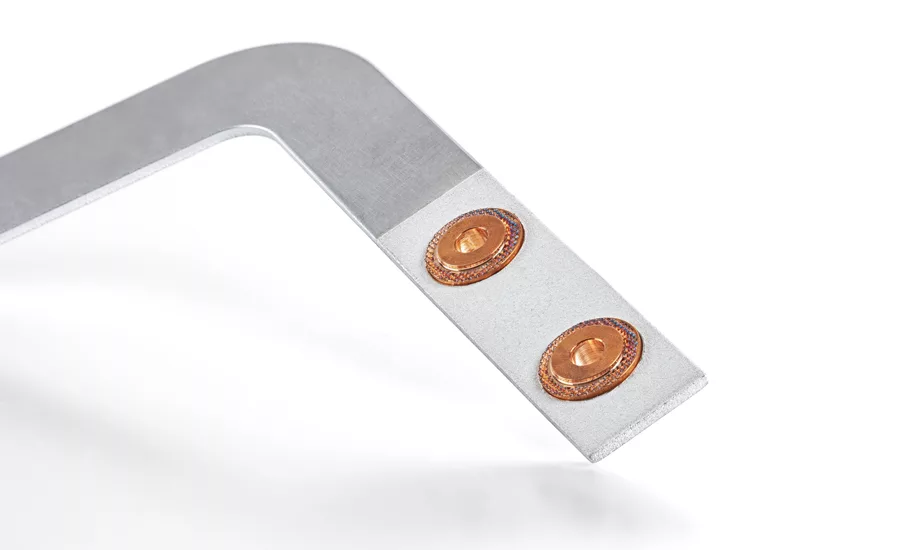
The silver coating enhances the conductivity of the bus bars, but it poses a challenge for secure attachment using screws, due to the relaxation properties of aluminum. To solve that problem, engineers integrated copper sleeves into the bus bar, providing a durable and electrically conductive connection that allows for assembly with screws.

The copper insert is essentially a contact washer. It eliminates concerns about compression set, which can occur in softer materials, such as aluminum over time. The screw goes through the insert, which allows for easy assembly and disassembly.

The challenge then became how to attach the sleeves to the bus bar. That problem was solved by Telsonic Ultrasonics Inc., a manufacturer of ultrasonic welding equipment for plastic and metal parts. 

For assembly, the copper sleeve is placed in a pre-punched hole in the bus bar. The sleeve is joined to the silver layer by ultrasonic welding, which preserves the integrity of the silver coating. The sleeve is designed with an oversized collar that enables the transmission of torsional ultrasonic vibrations through the sonotrode. 

The silver coating extends the compatibility of ultrasonic welding to new aluminum alloys. Ultrasonic welding enables the reliable and long-term joining of nonferrous metals with minimal electrical resistance.

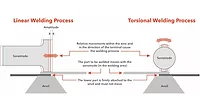
This application was successfully executed using Telsonic’s torsional Soniqtwist technology. Traditionally, ultrasonic metal welding involves the application of linear, or longitudinal vibrations. However, such vibrations have limitations in terms of the size, shape and orientation of parts that can be welded. These limitations are particularly evident in the EV industry, where bus bars, thick cables, large connectors and thin battery tabs must be joined.

Torsional ultrasonic welding overcomes these limitations. With Soniqtwist, strong forces can be applied in a short time, which is critical for joining thick aluminum or copper parts.

On the other hand, torsional energy can also be gently exerted at the joint interface, making the process suitable for sensitive parts. The low-impact process will not damage nearby electronic components. The vibration stress induced on the lower workpiece is only a tenth of the stress induced by conventional ultrasonic welding. 

Strictly speaking, Soniqtwist is a high-frequency friction welding process that can be categorized somewhere between vibration welding and ultrasonic welding. The sonotrode oscillates torsionally around its longitudinal axis in both directions. In a short time—between 0.1 and 0.4 second—a lot of energy is applied to the boundary surface of both parts, with a frequency of 20 kilohertz and an amplitude of up to 80 microns.

The design of the Soniqtwist’s “ultrasonic stack” is like that of conventional ultrasonic welding equipment, with a generator, converter and sonotrode. However, the sonotrode moves torsionally rather than longitudinally, which reduces the overall load on the parts to be joined. The process can apply 14.4 kilowatts of energy to the parts. Even with difficult materials, this creates joint strengths that are not obtainable with conventional ultrasonic welding equipment.

For more information, click www.telsonic.com.
KEYWORDS: ultrasonic welding

Share This Story

Looking for a reprint of this article?
From high-res PDFs to custom plaques, order your copy today!

Recommended Content

JOIN TODAY
To unlock your recommendations.

Already have an account? Sign In

  • Made in the U.S.A.

    Consumer Products Manufacturing: Made in the USA

    Supply chain lessons learned during the coronavirus...
    Automated Assembly Systems
    By: Austin Weber
  • Best Practices for Press-Fit Assembly

    Best Practices for Press-Fit Assembly

    In manufacturing, ironclad formulas for success are hard...
    Assembly Presses
    By: Jim Camillo
  • aem0523leader-tesla1.jpg

    Tesla Rethinks the Assembly Line

    Engineers at Tesla Inc. have developed a new process that...
    Assembly and Testing
    By: Austin Weber
Manage My Account
  • eMagazine Subscription
  • Assembly Newsletters
  • Online Registration
  • Subscription Customer Service
  • Manage My Preferences

More Videos

Sponsored Content

Sponsored Content is a special paid section where industry companies provide high quality, objective, non-commercial content around topics of interest to the ASSEMBLY audience. All Sponsored Content is supplied by the advertising company and any opinions expressed in this article are those of the author and not necessarily reflect the views of ASSEMBLY or its parent company, BNP Media. Interested in participating in our Sponsored Content section? Contact your local rep!

close
  • ultrasonic welding
    Sponsored bySonobond Ultrasonics

    Engineering Efficiency in High-Performance Assembly: How Ultrasonic Welding Enhances Throughput, Reliability and Quality

  • UV curing system
    Sponsored byDymax

    Why UV Intensity Alone Doesn’t Define Curing Performance

  • wooden pallets
    Sponsored byLEAN Manufacturing Products

    Eliminating Waste on the Shop Floor: Applying Lean Principles to Improve Manufacturing Efficiency

Popular Stories

ASSEMBLY News Now, episode-30: Volvo Redesigns EV Manufacturing

Volvo Redesigns EV Manufacturing

Boeing CEO Kelly Ortberg announces 1 billion investment

Boeing Plans $1 Billion Wichita Investment, Workforce Training Center

automated consumer goods assembly system

Best Practices for Cycle Time Optimization

Watch the latest episode of ANN now!

Events

July 24, 2025

From Shop Floor to CFO: How Manufacturers Are Closing the Loop Between Operations and Finance

On Demand Learn how manufacturers are bridging the gap between the shop floor and ERP systems to gain real-time visibility, streamline operations, and kick-start digital transformation—without waiting years.

Sponsored by:

PicoStratusGreen
July 30, 2025

Buffer Analysis and Design Fundamentals for Manufacturing Excellence

On Demand In this presentation, Dr. Herman Tang shares practical insights from his industry experience and research on buffer management in manufacturing operations.

View All Submit An Event

Poll

Difficult Assembly Processes

Which assembly process gives you the most difficulty?
View Results Poll Archive

Products

Manufacturing Cost Policy Deployment (MCPD) Profitability Scenarios: Systematic and Systemic Improvement of Manufacturing Costs

Manufacturing Cost Policy Deployment (MCPD) Profitability Scenarios: Systematic and Systemic Improvement of Manufacturing Costs

See More Products
Register for webinar - Modernizing Automotive Assembly: Why Upgrading Legacy MES is a Business Imperative

Related Articles

  • installation of the bushing

    Contact Bushing Assembles Aluminum Bus Bars for EVs

    See More
  • AluminumCopperBusbars.jpg

    New Aluminum-to-Copper Bonding Process Joins EV Bus Bars

    See More
  • Telsonic comparing welding processes

    Torsional Ultrasonic Welding Process Joins Metal Parts

    See More

Related Products

See More Products
  • Resistance Welding: Fundamentals and Applications, Second Edition

  • Welding Processes Handbook, 2nd Edition

  • Welding: Principles & Practices

See More Products

Related Directories

  • Herrmann Ultrasonics Inc.

    Herrmann Ultrasonics is a leading global company in providing ultrasonic welding solutions with five decades of expertise. With our 360° ULTRASONIC ENGINEERING, we offer customer specific support from concept, to high volume manufacturing, to after sales support. We become our customer's trusted advisor and solutions provider for their ultrasonic welding projects. As part of our global network, we have ultrasonic laboratories located in 20 countries, providing local support.
  • Sonobond Ultrasonics Inc.

    Sonobond’s ultrasonic welders produce strong, solid-state metallurgical bonds without heat, current, or solder, ensuring precise, repeatable results without material distortion. For product assemblers, this means faster cycle times, simplified workflows, and consistent, high-quality connections. These systems weld tinned copper wires without removing coatings and create joints with excellent thermal and electrical conductivity. By reducing rework and eliminating consumables, Sonobond solutions help streamline assembly processes and improve production efficiency.
  • Rinco Ultrasonics USA Inc.

    RINCO ULTRASONICS, established in 1976, is a Swiss manufacturer of the world's finest ultrasonic welding and cutting equipment. Specializing in Medical device assembly, Rinco is ISO14385 certified. Rinco's servo driven ultrasonic welder is the fastest, most precise and most user-friendly system available. Contact a Rinco expert for a consultation.
×

Never miss the latest news and trends driving the manufacturing industry

Stay in the know on the latest assembly trends.

JOIN TODAY!
  • RESOURCES
    • Advertise
    • Contact Us
    • Directories
    • Manufacturing Division
    • Store
    • Want More?
  • SIGN UP TODAY
    • Create Account
    • eMagazine
    • Newsletters
    • Customer Service
    • Manage Preferences
  • SERVICES
    • Marketing Services
    • Reprints
    • Market Research
    • List Rental
    • Survey/Respondent Access
  • STAY CONNECTED
    • LinkedIn
    • Facebook
    • Instagram
    • YouTube
    • X (Twitter)
  • PRIVACY
    • PRIVACY POLICY
    • TERMS & CONDITIONS
    • DO NOT SELL MY PERSONAL INFORMATION
    • PRIVACY REQUEST
    • ACCESSIBILITY

Copyright ©2026. All Rights Reserved BNP Media, Inc. and BNP Media II, LLC.

Design, CMS, Hosting & Web Development :: ePublishing