Artic Automates Appliance Assembly
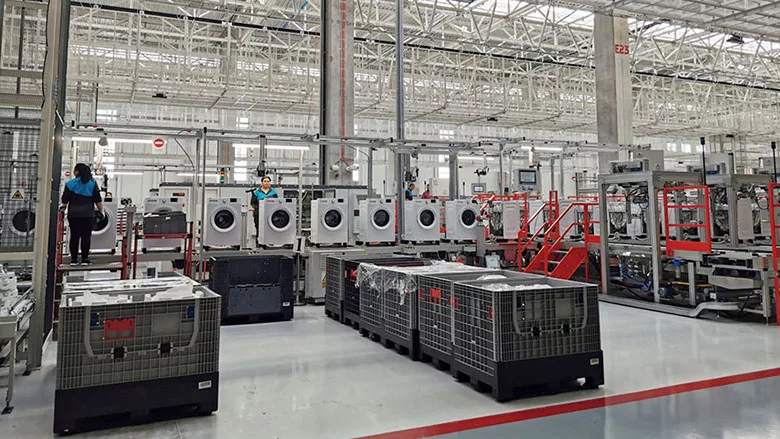
Over the past five years, automation of low-value tasks has reduced operational costs by 11 percent.
Photo courtesy Arctic SA
Romanian company Arctic SA is one of the largest manufacturers of home appliances in Europe. The company’s assembly plant in Ulmi, Romania, has produced more than 5 million washing machines since it opened in 2019. The company produces more than 350 washer models for both the domestic and international markets. Some 82 percent of the factory’s production is exported to 42 countries.
The factory represents an investment of more than 153 million euros. Although it employs more than 1,000 people, the state-of-the-art factory is a global leader in implementing automation. Over the past five years, automation of low-value tasks has reduced operational costs by 11 percent.
Parts, subassemblies and finished products are managed with an automated storage and retrieval system. Automated guided vehicles deliver parts to assembly lines. More than 200 robots perform various tasks throughout the factory. All processes are interconnected, and man-machine interfaces provide real-time information on the state of production to operators and management. More than 70 percent of the factory’s core operations are based on self-determined and self-managed systems, and quality control is 100-percent automated.
The factory is also a leader in sustainability. For example, between 2019 and 2022, more than 400 tons of recycled plastic, 60 tons of industrial fiber and almost 5 tons of fishing net yarn were used to manufacture parts for Arctic appliances. Some 20 percent of the factory’s electricity is supplied by on-site solar panels. A “digital twin” of the plant automatically adjusts factory lighting and optimizes the heating and cooling systems. The building management system uses an algorithm that takes in roughly 15,000 real-time data points from more than 650 energy-measurement devices and sensors.
These and other new technologies have enabled the company to reduce energy consumption by 17 percent per product, to reduce water consumption by 25 percent per product, and to decrease overall greenhouse gas emissions by 22 percent.
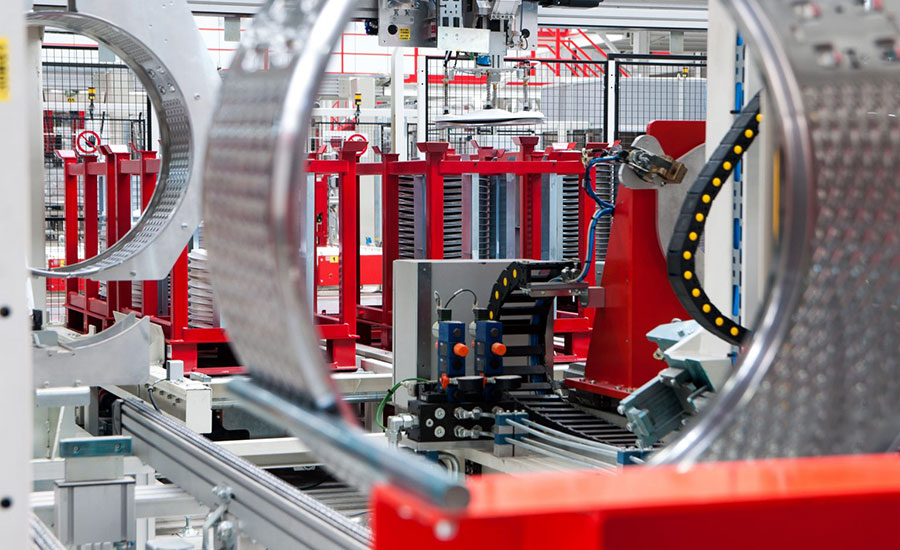
More than 70 percent of the factory’s core operations are based on self-determined and self-managed systems, and quality control is 100 percent automated. Photo courtesy Arctic SA
Getting There
Success like that didn’t happen by accident. When designing the Ulmi plant, Arctic management did not merely want to make incremental improvements over the company’s nearby factory in Gaesti, Romania. They aimed to create a plant that would serve as a beacon for the industry and transform operations.
The Gaesti factory had massive production lines, but used little automation. Shifting from workflow-driven manufacturing to data-driven manufacturing promised enhanced efficiency and product quality. With a digitized and automated plant floor, Arctic could experiment with exciting new technologies that reduce costs, increase efficiency and enhance performance visibility. Modernizing manufacturing processes also offered significant business opportunities for creating connected products, from design to consumer services.
Looking for quick answers on assembly and manufacturing topics? Try Ask ASM, our new smart AI search tool. Ask ASM
To create a factory of the future in Romania, Arctic needed help. Even today, smart factories are still in their infancy, and Arctic wanted to be at the forefront of the fourth industrial revolution.
To get there, the company teamed up with consulting firm Accenture to create a foundation for rapidly integrating advanced technologies into its operations. If a new technology worked successfully in Ulmi, the appliance manufacturer would use that experience as a template for implementing it at other Arctic plants around the world.
Accenture’s team focused on the client’s ultimate goal—launching production operations on an aggressive timeline. From the beginning, Accenture worked onsite alongside the Ulmi plant’s operational management team. This enabled Accenture’s team to quickly capture firsthand any issues that threatened to derail timely implementation of a technology.
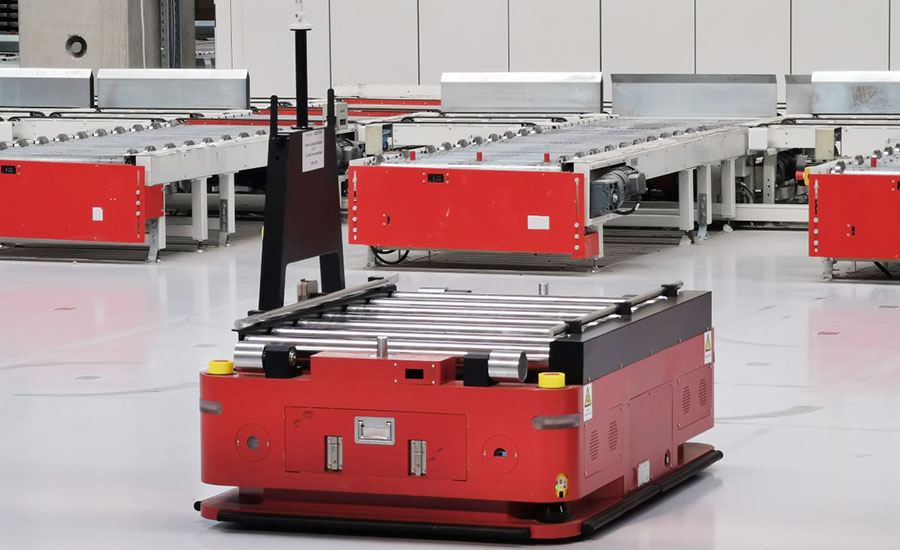
Automated guided vehicles deliver parts to assembly lines. Photo courtesy Arctic SA
Specialists from Accenture’s network of Industry X Innovation Centers in Cluj, Romania, and Modena, Italy, worked with Arctic to blueprint and implement a new manufacturing execution system (MES) from SAP. The team also created a technology layer that integrates the software with the company’s systems and machinery, so they can share data and speak the same language. An internet of things system links with the company’s SAP enterprise resource planning system, manufacturing equipment, warehouse management, and other IT systems. Accenture also designed easy-to-use dashboards to display near real-time data from company systems and shop floor machinery. In total, Accenture integrated the new manufacturing system with more than 250 shop floor machines and 14 IT systems.
The team standardized the machine integration messages and created a library so the company can reuse them like building blocks for other MES integration projects. The messages help machines communicate with the company’s systems and each other. For instance, messages currently used to communicate with injection-molding machines could potentially be used on mechanical presses for metal parts in another plant.
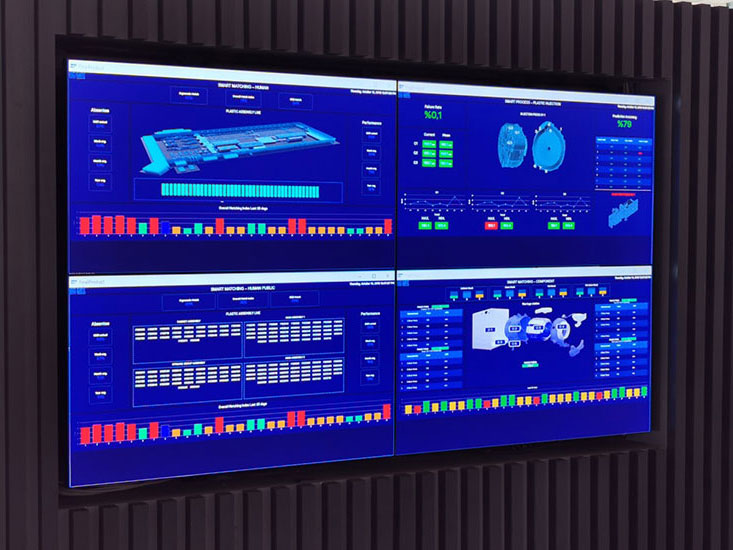
Easy-to-use dashboards display near real-time data from company systems and shop floor machinery. Photo courtesy Arctic SA
The system has helped Arctic to automate as much as 80 percent of its supply chain processes. Data-flows to and from company and plant systems mean that important production information and equipment are always on tap for employees. They no longer need to spend valuable time manually checking information or materials. Management can also view real-time production data to make efficient decisions. All production information is presented on user-friendly dashboards.
For example, Maria, a production manager, used to request production status updates several times a day from the production shift leader. With the new system, she can review updates in real-time on her laptop or tablet.
Workers can also call for support, report problems, and send feedback about speed, quality and packing time. Workers can request the specific materials they need when they need them—and have them delivered right to their spot on the line.
Take Nicu, an assembly line operator, for instance. His job is to attach a motor to each washing machine. Previously, a forklift brought the motors to his workbench, stacked in boxes. He needed to call a colleague to help pick up the heavy boxes and carry them from the stack to his bench. Now, he can use his tablet to request the motors, which are delivered just in time, directly to his workbench via an autonomous vehicle. This eliminates a safety hazard and enables Nicu to do a better job more quickly. In addition to improving productivity, the system upholds Arctic’s values of advancing employee empowerment, well-being and safety.
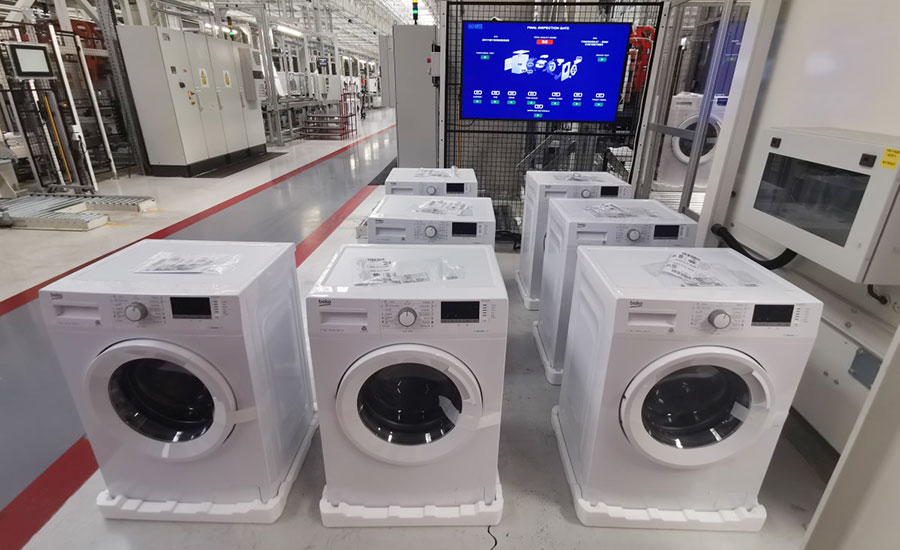
The assembly plant has produced more than 5 million washing machines since it opened in 2019. Photo courtesy Arctic SA
Value Delivered
Since it began operation, the Ulmi plant has helped Arctic lower non-quality expenses, increase capacity utilization and automate low-value tasks, reducing operational costs by 11 percent. As a result, workers are able to focus on more valuable tasks that help improve productivity, product quality and profitability.
The factory runs so well, in fact, that it was designated a Lighthouse Factory in 2022 by the World Economic Forum, one of only 44 such facilities in the world. Lighthouse factories are chosen for their leadership in applying Industry 4.0 technologies to drive financial and operational impact. Arctic can now scale the innovative solution to additional plants.
By transforming its core production and manufacturing capabilities, Arctic is achieving new levels of efficiency with a semiautomated supply chain and digital manufacturing capability. As Arctic expands and evolves its business, it can easily integrate more cutting-edge technologies. These innovations are helping Arctic deliver better quality products to consumers, faster.
“The investment and effort have really paid off,” says Turgay Öztürk, CIO at Arctic, who collaborated with Accenture to blueprint and build a digitized washing machine plant. “We’re proud to be an example to our industry peers on how to create a safer, more efficient workplace.
To see a video about the plant, click here.
For more information on appliance manufacturing, read these articles:
Robotic Screwdriving Boosts Throughput for Appliance Manufacturer
GE Appliances Uses Advanced Automation to Dish Out Productivity
How to Boost Production by Six-Fold
Looking for a reprint of this article?
From high-res PDFs to custom plaques, order your copy today!


