Manufacturing companies contributed $2.17 trillion to the U.S. economy according to the most recent annual data. Manufacturers, of which 98.6 percent qualify as small businesses, have become more agile, more productive and leaner in recent years.
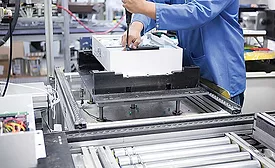
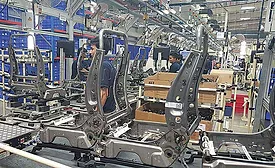
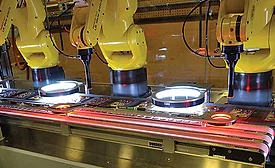
Whether the product being manufactured is a mobile phone or an aircraft seat, the assembly processes will likely require some combination of manual and automated transfer operations.
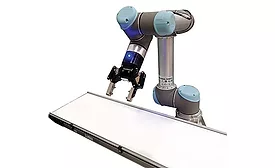
Denmark is famous for being the home of Hamlet, The Little Mermaid and Lego. The nation is also well-known for its thriving robotics industry, thanks in no small part to Universal Robots A/S.
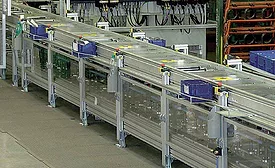
Most people take gravity for granted. But, manufacturers know better, especially when it comes to moving large items through a plant for assembly, finishing, storage and order-fulfillment purposes. The proof is in their use of gravity conveyors to per-form these tasks.
Having multiple options to solve a problem is a great thing for any manufacturer. Having too many options, however, can prove problematic when it prevents a company from deciding on a specific plan of action in a timely manner.
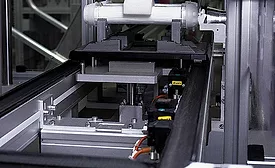
Motion Index Drives Precision Link Conveyors combine excellent accuracy and high index speed capability in order to move and position a product at multiple stations with flawless operation.
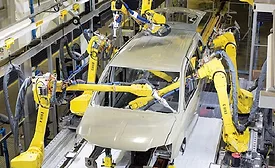
India is one of the world's fastest-growing economies thanks, in part, to the automotive industry, including suppliers like Johnson Controls. This global conglomerate produces a wide range of components for cars.
Industry 4.0 is the hottest trend to hit the manufacturing world since the Toyota Production System started to transform assembly lines two decades ago. Although most of the talk about digital production systems and smart factories involves things such as augmented reality, collaborative robots or data analytics, conveyors play an equally important role.
Of all the things that conveyors have moved the past 222 years, none is more iconic than the small chocolate candies that overwhelmed Lucille Ball and Vivian Vance working on the assembly line in September 1952.
During the early decades of the 20th century, Skoda Auto was a Czech automobile manufacturer with a few small plants (in Mlada Boleslav, Kvasiny and Vrchlabi) and a strong desire to meet the mobility needs of its citizens. But, that all changed after World War II.