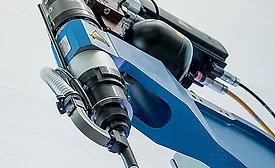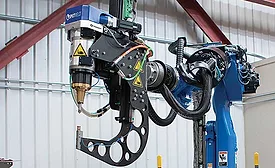
As manufacturers expand the use of aluminum, titanium, magnesium and other high-strength, lightweight alloys, interest in alternative joining technologies is increasing.
The first thing a visitor notices on arriving at the headquarters of Genesis Automation in St. Charles, IL, is the company's business hours. Rather than 9 a.m. to 5 p.m., there's this: "However long it takes."
How well an assembled plastic part performs depends a great deal upon how its component pieces are joined. Those made of strong, hard plastic may be fastened together or bonded. Thermoplastic pieces allow for even more options, including screws and rivets, various types of adhesives or welding, staking and being snap-fit.
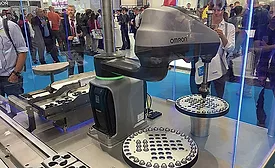
Collaborative robots are an important element of Industry 4.0 and smart manufacturing initiatives. Many engineers are intrigued by these next-generation machines that can control force and work safely next to people on assembly lines without traditional safety guarding.
Based in Furtwangen, Germany, Ketterer manufactures electromechanical drive systems. The company's products are used to adjust the height of desks and workstations and are also deployed widely in entry systems, warehouses and the machinery industry.
More than 46,000 manufacturing engineers and managers from 47 countries attended Automatica 2018, which took place June 19-22 at the New Munich Trade Fair Centre in Germany.
According to a new study by P&S Market Research, global sales of self-piercing rivet technology (SPR) will grow at a cumulative annual rate of 26 percent between 2016 and 2022. P&S predicts manufacturers worldwide will consume 45 billion of the fasteners in 2022.
It took 40 years, but we now know that hot dogs and apple pie aren't the only things baseball and automakers (and their suppliers) have in common. Another thing is enterprise resource planning (ERP) software, which gathers and disseminates critical management information across an entire organization.