BOSTON—Nearly one in four exports from Massachusetts is a medical device, making the state No. 1 in the nation in share of exports of medical devices as a percentage of total exports, according to a report by the Massachusetts Medical Device Industry Council.
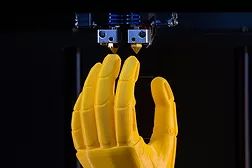
TORONTO—Assembling a microrobot used to require a pair of needle-nosed tweezers, a microscope, steady hands, and at least eight hours. But, now University of Toronto engineering researchers have developed a method that requires only a 3D printer and 20 minutes.
Myriad automotive components are checked for leaks, including turbochargers, oil filters and radiators. However, leak testing doesn’t end with the suppliers of those components.
Ergonomic upgrades are becoming a vital part of many workplaces, and assembly workstations can be especially challenging. According to data from the Occupational Safety and Health Administration, ergonomic issues cost U.S. companies upwards of $54 billion annually, and they account for one-third of workplace absences.
UV-curing adhesives are often the first choice for fast and efficient bonding of components. Able to cure within seconds, these adhesives allow high throughputs to be achieved in serial production.
For medical devices such as catheters, syringes, vials, test tubes and injector pens, many manufacturers are turning to plastics that are formulated to resist harsh chemical and environmental conditions.
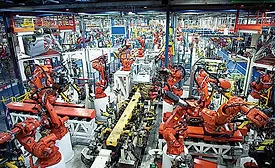
ANN ARBOR, MI—Industrial robot orders in 2018 grew 24 percent over the previous year in the life sciences, food and consumer goods, plastics and rubber and electronics industries, according to the Robotics Industries Association. The main reasons are lower robot prices, and robot systems that are easier to install, integrate and program.
BRONX, NY—The Medical Device Innovation, Safety and Security Consortium has announced it is developing a set of recommended practices and profiles for securing medical systems based on the normative requirements in the widely used ISA/IEC 62443 series of standards for industrial automation and control systems cybersecurity.
For medical device manufacturing, quality is crucial. To ensure quality in production, audits of the manufacturing facilities by a government health organization are standard. The audits and inspections are not, however, standard between countries. The Medical Device Single Audit Program (MDSAP) is looking to change that.