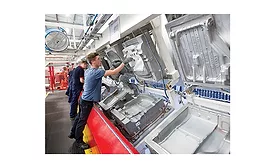
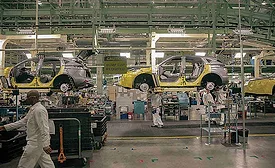
The past year brought blockbuster headlines for U.S. manufacturing. Taiwanese electronics giant Foxconn unveiled plans to build a $10 billion assembly plant in Wisconsin that would make liquid-crystal display panels and employ as many as 13,000 people.
MARLBOROUGH, MA—Boston Scientific Corp. has agreed to buy rival BTG Corp. for $4.2 billion to expand its offering of medical devices to treat cancer and other disorders. Boston Scientific makes stents that hold open damaged blood vessels. BTG makes medical technology for physicians, such as cryoablation products to freeze and destroy diseased cells, and radiotherapy that delivers radiation straight to tumors.
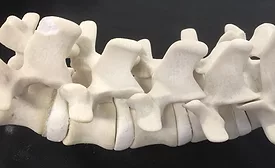
NOTTINGHAM, England—A team of Nottingham Trent University researchers are 3D printing replica human vertebrae that can act and feel like real bone tissue to help train spinal surgeons before they go into live operations.
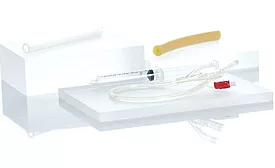
Medical device manufacturers value silicone adhesives for their ability to bond various substrates when assembling devices such as catheters, pacemakers, cochlear implants, aesthetic implants and gastric balloons.
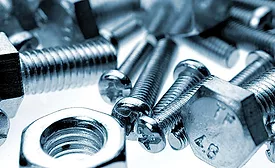
Many engineers will put great thought into selecting the proper type of fastener for their design, but overlook the importance of finish. When selecting the best finish for fasteners, it is wise to consider the following factors
How well an assembled plastic part performs depends a great deal upon how its component pieces are joined. Those made of strong, hard plastic may be fastened together or bonded. Thermoplastic pieces allow for even more options, including screws and rivets, various types of adhesives or welding, staking and being snap-fit.
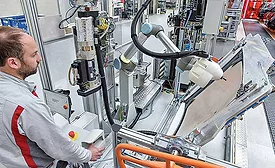
Collaborative robots are an important element of Industry 4.0 and smart manufacturing initiatives. Many engineers are intrigued by these next-generation machines that can control force and work safely next to people on assembly lines without traditional safety guarding.
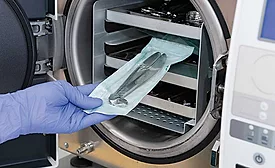
With the rise in antibiotic-resistant "superbugs" in hospitals and medical centers, cleanliness and sterilization of medical devices have become a top priority. Cleaning products have become stronger and more aggressive to sanitize devices and prevent the spread of illness between patients.
Increasing demand for smart devices and embedded intelligence is driving manufacturers in a variety of industries to invest in new production tools and technologies. Additive manufacturing, advanced sensors, augmented reality, cloud-based computing, collaborative robots and digital twins are just a few of the many trends transforming factory floors today.
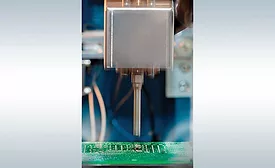
Taken literally, the terms "accurate dispensing" and "dispensing with accuracy" are not interchangeable. In practice, however, manufacturers and their machine operators know that the words describe the same desired result: Dispensing an exact amount of material, at a specified location, on a repeatable basis
 RSS
RSS