The growing emphasis on green chemistry and the circular economy has redirected research toward sustainable adhesives, seeking materials that balance bonding performance with renewability, recyclability and reduced toxicity.
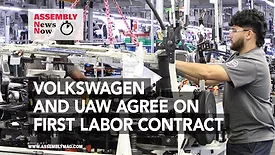
The labor contract, in force for 3,200 employees at the automaker’s assembly plant in Chattanooga, Tennessee, is the first UAW contract at a Southern auto plant outside of the Detroit Three.
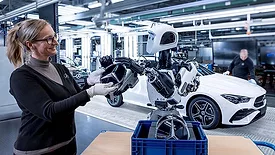
Compared with Industry 4.0, where humans mainly act as supervisors, Industry 5.0 elevates human expertise and contextual understanding. The objective is to allow people to focus on high-value cognitive tasks while being supported by intelligent machines that handle routine, hazardous or precision-intensive work.
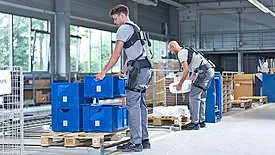
The study focuses on the advantages and difficulties encountered when users wear a back-support exoskeleton during manual material handling tasks. In addition, the research offers a statistical comparison of the participants’ physical exertion and the biomechanical effort they perceive while engaging in these tasks.
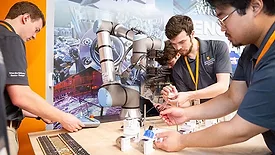
A team of young engineers at the University of Tennessee is using a six-axis collaborative robot to automate assembly steps such as terminal insertion and wire routing.
On paper, many manufacturing facilities are high-performing operations, but research shows that even in the most well-run environments, frontline workers don’t always feel engaged, empowered or confident in their day-to-day performance. So where are manufacturers getting the workplace right, and where are they falling short when it comes to how employees actually experience the plant?
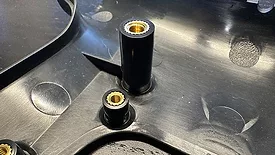
Impulse heat staking simplifies installation of brass inserts by generating heat only when needed and keeping the cycle consistent from part to part. Real-time depth verification adds straightforward confirmation of final insert depth and insert presence.
The Augmentir connected worker platform is designed to help manufacturing and service teams improve operations, close skills gaps, capture tribal knowledge, and drive continuous improvement efforts.
Nashay Naeve, president of the Engineered Plastic Components business unit at Tsubaki Nakashima, breaks down why manufacturers are still struggling to fill roles, what leaders can change immediately to reframe the industry and how modern operations are reshaping what manufacturing careers actually look like.
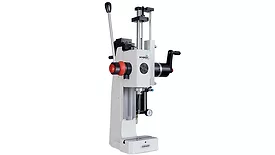
Manual presses offer high precision, reliability and flexibility without the high price tag of powered presses. They are ideal for small production runs, precise assembly tasks or high-mix production environments that don’t merit more expensive machines.
 RSS
RSS