GM and Nvidia Partner on AI Technology
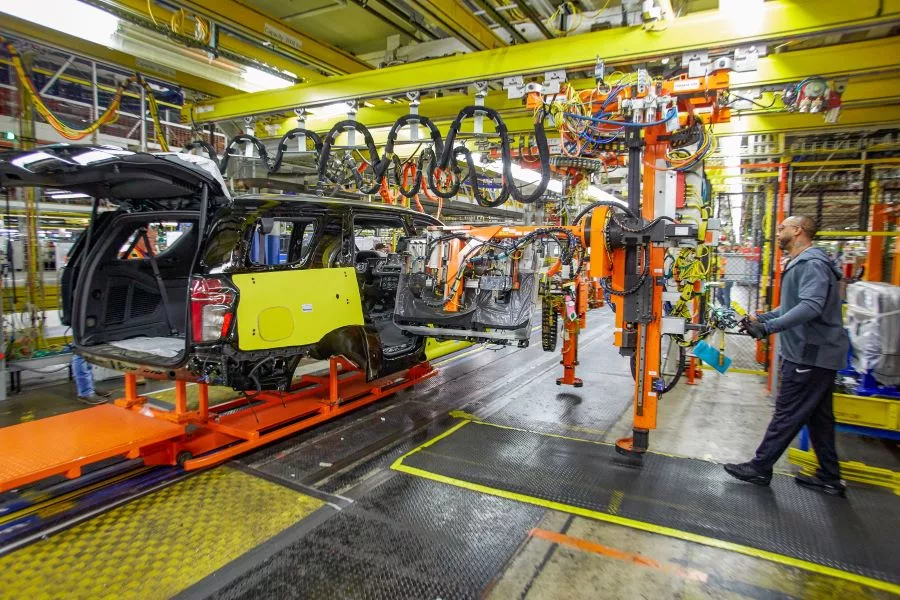
Photo courtesy General Motors
SAN JOSE, CA—General Motors and Nvidia Corp. are collaborating on next-generation vehicles, factories and robots using artificial intelligence, simulation and accelerated computing technology. Engineers at the two companies will use Nvidia’s Cosmos and Omniverse software to create AI models to optimize GM’s factory planning and robotics. GM will also use Nvidia’s Drive AGX for in-vehicle hardware for future advanced driver assistance systems and in-cabin enhanced safety applications.
GM plans to use AI to create digital twins of assembly lines, allowing for virtual testing and production simulations to reduce downtime. The effort will include training robotic platforms already in use for operations such as material handling and welding. The goal is to improve safety and efficiency in the automaker’s assembly plants.
“AI is transforming GM manufacturing, and we’ve just scratched the surface of its potential,” says Jens Peter “JP” Clausen, executive vice president of global manufacturing and sustainability at GM. “And, it’s not about automating everything or building more vehicles faster. Our winning formula is driven by a combination of flexible manufacturing, advanced technology and a talented workforce.
“As we work to offer the highest-quality vehicles in the most attractive portfolio, [our] manufacturing team is on the forefront of identifying innovation to enhance safety and quality, reduce costs, and support our employees from foundries to final assembly, and everywhere in between,” explains Clausen.
“While our talented team continues to be the driving force behind our high-quality vehicles, we're harnessing the power of artificial intelligence to innovate and continuously improve in an intensely competitive landscape,” notes Clausen. “GM is leveraging AI technology to…enable efficiency in our manufacturing facilities….We’re using AI and advanced software to help our team minimize ergonomic stressors, enable workplace safety and enhance quality in our manufacturing plants.
“Investing in our current and future workforce with better technology helps ensure that our teams have the skills and tools needed as we continue to evolve our manufacturing footprint to meet customer demand,” claims Clausen. “Using digital twins, we simulate a running production line before it’s constructed, optimizing our planning process and allowing us to scale faster while saving time and money. It also helps our [employees] identify and solve problems more effectively.
“Through a combination of AI and machine learning, we can quickly and accurately pinpoint potential leaks in battery packs, allowing for quick repairs and supporting the safety and quality of our batteries,” says Clausen. “Using both robotics and a proprietary AI tool, we can inspect welds and paint coats to identify irregularities and anomalies, continuously enhancing the quality of the vehicles our customers have come to love and trust.”
Looking for quick answers on assembly and manufacturing topics? Try Ask ASM, our new smart AI search tool. Ask ASM
“GM has enjoyed a longstanding partnership with Nvidia, leveraging its GPUs across our operations,” adds Mary Barra, CEO of General Motors. “AI not only optimizes manufacturing processes and accelerates virtual testing, but also helps us build smarter vehicles while empowering our workforce to focus on craftsmanship. By merging technology with human ingenuity, we unlock new levels of innovation in vehicle manufacturing and beyond.”
“The era of physical AI is here, and together with GM, we’re transforming transportation, from vehicles to the factories where they’re made,” says Jensen Huang, CEO of Nvidia. “We are thrilled to partner with GM to build AI systems tailored to their vision, craft and know-how.”
Looking for a reprint of this article?
From high-res PDFs to custom plaques, order your copy today!