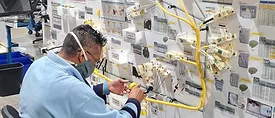
Experience, foresight and a reliable enterprise resource planning (ERP) system are the keys to cutting expenses throughout the wire harness assembly process.
In the marketing world, a pair of scissors is all that's needed to cut expenses. But, in the real world of business, scissors are the last thing company executives need near them during the stressful process of deciding where to reduce costs.
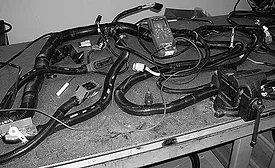
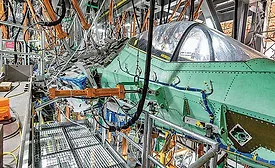
Vehicles have become increasingly electrical over the years. This is not just power electronics, but also sensor data, communications and many other coordinated electrical signals. For aircraft or commercial vehicles, wire harnesses can be even more complex with hundreds of interconnection points.
PALO ALTO, CA—Engineers at Tesla Inc. have developed a new wiring architecture that enables more robot automation in the manufacturing process and uses fewer materials.
So, you're a new engineer freshly out of college. You've been hired at a large OEM to design wire harnesses and wired box assemblies. Not having the proper training in college, you ask yourself, "Where do I start?" The possibilities are limitless.
A typical Porsche sports car contains more than 2,000 individual wires. If laid end to end, the wiring would stretch 2 to 3 kilometers. Designing such a complex wiring system would be challenge enough, but at Porsche, almost no harness design in series production matches another one.
A key component of any electronic or electrical system is the cable assembly or wire harness—and yet it is typically one of the last components to be addressed.