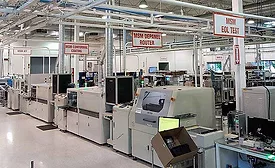

Above all else, electronic products for aerospace and defense equipment must be durable and reliable. Based in Gloucestershire, England, Ultra Electronics Precision Control Systems (UPCS) has been making such products for both industries since 1925.
Gentherm Inc. has been assembling a wide range of thermal management products for the automotive industry since 1991, when it was known as Amerigon. In 1996, the company created the industry's first thermoelectrically heated and cooled seat system (called Climate Control Seat).
It is safe to say that the debate about the environmental impact of plastic will continue. But, it is also a fact that many manufacturers of plastic products are quietly becoming greener.
Fire and ice don't mix. The same applies to water and batteries. In an electric vehicle, a tiny bit of water vapor can damage lithium-ion battery cells.
Picture a flying taxi able to whisk passengers to their chosen destination within minutes, not hours. A noiseless aircraft free from carbon emissions, capable of vertical takeoff and landing in the heart of a major city. What once sounded like a scene out of a science-fiction novel is cruising toward reality, forever altering the way we move.
At the start of the COVID-19 pandemic, the healthcare industry faced a large-scale shortage of personal protective equipment (PPE), which put frontline workers at risk of infection.
Management theory and practice don't always match, and few people know this better than the individuals who oversee assembly lines. Their real-world experience has taught them that the best method to achieve success always depends on several application-specific factors. Among them are part size and shape, available automation, required cycle time and the materials being joined.
Bosch Rexroth's introduction of adaptive control in 2012 advanced the quality and efficiency of robotic resistance welding. Using cutting-edge hardware and software, adaptive control monitors various process parameters to perfect each weld.
Saving a penny per part or a millisecond of cycle time might not matter to some manufacturers. But machine builder Eclipse Automation knows that even small gains can offer huge competitive advantages for its customers. Greater flexibility and uptime through predictive maintenance are also crucial.
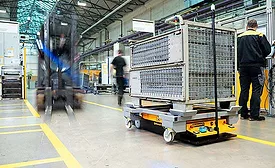
Automotive supplier Continental AG has developed its own line of autonomous automated guided vehicles (AGVs) for transporting parts in its assembly plants and warehouses. The autonomous AGVs can transport loads weighing more than a ton.