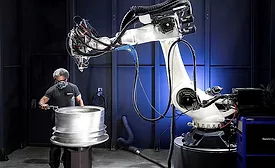
Traditionally, additive manufacturing has been used in the aerospace industry to print small metal parts, such as brackets and fuel nozzles. But, Relativity Space Inc. hopes to change that scenario by thinking big.
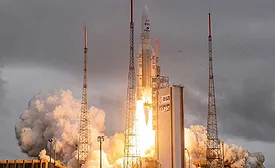
More than 18 years after NASA commissioned it to be built by TRW Inc., the James Webb Space Telescope (JWST) was launched into orbit by Ariane rocket flight VA256 on Dec. 25, 2021. The launch took place at the Guiana Space Centre in French Guiana.
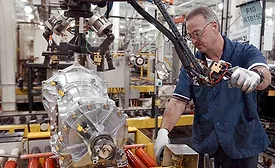
Electric vehicles have been a vital element of the green-energy revolution for the past several years. Nonetheless, producing key EV components continues to present great technical challensges for many large and established manufacturers.
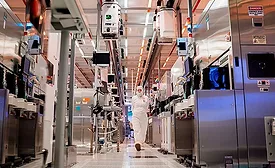
In January, Intel announced that it will invest $20 billion in a new microchip manufacturing facility near Columbus, OH. The fab is expected to create 3,000 company jobs, 7,000 construction jobs, and tens of thousands of additional jobs for suppliers and partners.
The Covid pandemic has increased demand for wearable medical devices that can be used for remote monitoring and diagnostics applications. That's good news for adhesive suppliers that provide biocompatible materials for joining or sealing plastic and fabric parts.
Mullen Technologies Inc. is a start-up company that's developing several types of electric vehicles, including a crossover, a sports car and a delivery van. The Brea, CA-based firm is led by an entrepreneur who formerly worked in the entertainment industry as a record producer.
The COVID-19 pandemic has propelled a national movement to strengthen domestic supply chains and reshore. Recruitment of the next generation of skilled manufacturing talent is paramount to this effort, but there is a widening gap between the skills needed by industry and the skills of job candidates.
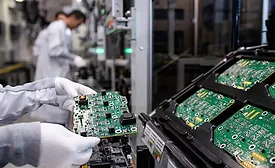
While batteries and motors are the "lead actors" in electric vehicles, power electronics play an equally important behind-the-scenes role. Vehicle power electronics primarily process and control the flow of electrical energy in EVs.
The internal combustion engine may not be dead, but it has lost its spot in the limelight. The global demand for energy without emissions is driving markets and policy. In response, the world has turned its attention to electrification as the future of transportation.
 RSS
RSS