With so many ways to formulate plastic to get just the right combination of color, texture, strength and durability, it’s easy to forget how the parts will be assembled. However, if the parts will be assembled with screws, overlooking such parameters as thread style, driver speed and boss design could spell disaster on the assembly line.
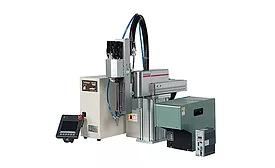
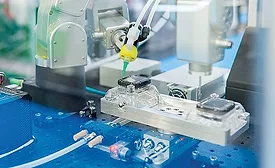
Clear polymer materials can be successfully bonded with a new process that combines simultaneous through-transmission infrared laser welding with precision ultrasonic spray deposition technology
Laser welding of plastic parts creates precise, high-quality, particulate-free joints for medical devices, consumer products and other assemblies. However, for the process to work, the laser light must pass through the top part to be absorbed by the bottom part. Welding a clear plastic part to another clear plastic part was not possible.
How quickly things change. On March 1, I was one of 15,000 people watching the Chicago Cubs play a spring training game at a ballpark in Mesa, AZ. It was warm and sunny, the beer was cold, and I had not a care in the world.
For any plastic-injection-molding tooling company, nothing is more important than making sure its molds allow for consistent, quick and clean demolding of just-made parts. So anything that helps the company achieve this crucial goal is worth pursuing.
In the small town of Wauwatosa, WI, sits the state-of-the-art noise, vibration and harshness laboratory operated by Briggs & Stratton. Within the lab are two anechoic chambers outfitted with sound-absorbing acoustic wedges.
Countries around the world share a common goal of reducing carbon emissions. Finland, for example, aims to reduce its level of emissions by 5 percent (5 million kilograms) each year by investing in green technology for public transportation.
Building complex assemblies is now a standard practice for electronic manufacturing services (EMS) companies. This reality applies to firms that do work locally, nationally or internationally.
Thermoelectric coolers are great for day trips, tailgating, boating or even overnight camping trips. Instead of ice, these coolers rely on a thin, flat electronic assembly called a Peltier device.
Light-curing adhesives, also referred to as UV-cure adhesives, offer many advantages for automated assembly. The speed at which the adhesives are cured, the ability to fit into an automated process, and the strength of the bond are reasons why manufacturers may choose light-curing adhesives over other adhesive options.
 RSS
RSS