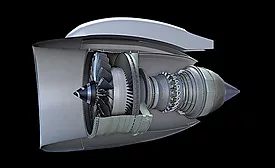
As aerospace engineers attempt to create products that can fly faster, higher and more efficiently, new types of materials are essential. Ceramic matrix composites (CMCs) hold tremendous promise. However, they can be difficult to join.
WASHINGTON--The U.S. manufacturing sector has weathered a bumpy road over the course of the past two decades, but successfully righting the country's industrial ship would mean an economic windfall of $530 billion, according to a new report from The McKinsey Global Institute.
Regardless of whether they are called drones or unmanned aerial vehicles (UAVs), their popularity is increasing among consumers, military leaders and institutions around the world. In fact, analysts at market researcher Teal Group predict that global spending on UAVs will reach $14 billion by 2024.
NEW YORK--Boeing Co. is fixing production problems with its 777 wide-body jetliner, but has not stopped production and does not expect the snags to delay deliveries to airlines, it said on Monday. The Chicago-based aerospace and defense company said it had given workers more time to catch up on "behind-work" on the 777 assembly line in its massive factory in Everett, WA.
PLATTSBURGH, NY--Norsk Titanium, a supplier of aerospace-grade, additive manufactured, structural titanium components, opened its Plattsburgh Development and Qualification Center here last week. The facility houses nine rapid plasma deposition titanium printers that will make aerospace components for Boeing and other aerospace producers.
A typical Porsche sports car contains more than 2,000 individual wires. If laid end to end, the wiring would stretch 2 to 3 kilometers. Designing such a complex wiring system would be challenge enough, but at Porsche, almost no harness design in series production matches another one.
WASHINGTON--The Trump administration is advocating for a more balanced trade relationship with Japan as high-level economic talks with the Asian nation advance this week in Washington, according to Vice President Mike Pence.
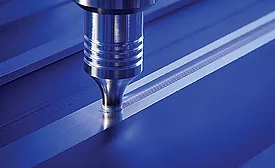
Originally developed for joining aluminum, friction stir welding is now being applied to other materials, including steel, copper, titanium and even nylon.
Product versatility is just as important to suppliers as it is to manufacturers. A product that can be used in multiple applications and industries is one with wide market appeal.