WASHINGTON--The Bureau of Labor Statistics recently reported that the United States added 196,000 factory jobs in 2017, including 25,000 jobs in December. Scott Paul, president of the Alliance for American Manufacturing, says that factory jobs are growing at a faster rate than jobs in the overall economy.
Needles are one of the most basic and least glamorous types of medical devices. But, every day, doctors and nurses rely on "sharps" to administer medicine, draw blood, conduct biopsies and perform many other vital medical procedures.
The need to mark parts or assemblies with some sort of identification code is becoming more and more important to facilitate quality control, supply chain management, brand protection, recalls and regulatory compliance.
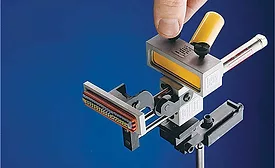
For manufacturers, the product-miniaturization trend is kind of a Catch-22. They know that serving a large and ever-expanding marketplace ensures company growth—so long as their robots can precisely place ever-smaller parts into subassemblies, final assemblies or packaging. Specially designed small grippers and vacuum cups have enabled many manufacturers to achieve both goals.
WASHINGTON—Invoking powers the U.S. hasn’t used in more than a quarter century, the Trump administration has begun an investigation into Chinese aluminum imports that could lead to tariffs. The Commerce Department is taking the unusual step of initiating the case itself, rather than going through the regular route of starting an investigation based on petitions filed by U.S. companies.
Historic events make a Major League Baseball (MLB) season memorable. In October 2017, for instance, the Houston Astros won its first World Series championship ever. Several months before that, however, a less-well-known event took place: MLB approved the use of any Whoop Inc. wearable fitness tracker by all players and coaches in games.
WASHINGTON--New orders for manufactured goods fell 0.1 percent in October from the month before, according to a report from the Commerce Department on Monday, but that was better than the 0.4 percent decline expected in a consensus estimate from analysts. This latest performance followed an upwardly revised September hike of 1.7 percent.
U.S. manufacturing continued to roll in 2017. Want proof? Look no further than Toyota Motor Corp. In September, the world’s largest automaker announced that it will invest $374 million at five U.S. factories.
WASHINGTON--The U.S. manufacturing sector has weathered a bumpy road over the course of the past two decades, but successfully righting the country's industrial ship would mean an economic windfall of $530 billion, according to a new report from The McKinsey Global Institute.