Assembly Magazine logo
search
Ask ASSEMBLY AI
cart
facebook twitter linkedin youtube
  • Sign In
  • Create Account
  • Sign Out
  • My Account
Assembly Magazine logo
  • TRENDS
    • Ask ASSEMBLY AI
    • Trends
    • News
    • New Products
  • INDUSTRIES
    • Aerospace
    • Appliance
    • DFMA Assembly
    • Medical Devices
    • Green Manufacturing
    • Lean Manufacturing
    • Machinery Assembly
    • Electronics Assembly
    • Automotive
  • TECHNOLOGIES
    • Adhesives & Dispensing
    • Assembly Presses
    • Automated Assembly Systems
    • Manufacturing Management
    • Manufacturing Software
    • Motion Control
    • Screwdriving & Riveting
    • Robotics
    • Test & Inspection
    • Plastics & Metal Welding
    • Wire Processing
    • Workstations
  • AUTONOMOUS & ELECTRIC MOBILITY
    • AEM Magazine Archives
    • Autonomy
    • Electrification
    • Mobility Services
    • Assembly & Testing
    • AV/EM News
  • MEDIA
    • Ask ASSEMBLY AI
    • Podcasts
    • Assembly News Now
    • Assembly TV
    • Webinars
    • eBooks
  • EVENTS
    • Calendar
    • The ASSEMBLY Show
  • MORE
    • Exclusives >
      • Plant of the Year
      • Capital Spending
    • Buyers Guide >
      • Supplier Insights
    • Classifieds
    • Featured Products
    • Newsletters
    • Store
    • White Papers
    • Columns
    • Sponsor Insights
  • INFOCENTER
    • Assembly & Test Solutions
  • EMAGAZINE
    • eMagazine
    • Archive Issues
    • Advertise
    • Contact Us
    • Sign Up
ColumnsAppliance AssemblyThe Editorial

The Truth Will Come Out in the Wash

By John Sprovieri
August 7, 2013

Imagine the U.S. Department of Energy establishes aggressive new energy-efficiency standards for your product. As a result, you spend millions on R&D to meet the challenge.

But it’s all good. You introduce a new product that consumes much less energy than previous models, saving consumers hundreds of dollars over the life of the product. Consumer Reports rates the product among the best. The product becomes a best-seller, and you invest additional millions in plants and people to keep up with demand. You even reshore some production from overseas. Between November 2011 and July 2013, your stock price nearly triples.

Then the other shoe drops. Suddenly, you’re facing a pair of lawsuits alleging a defect in your product. The suits are given class action status, even though the alleged defect has only been reported by a small amount of people who bought your product and the problem may, in fact, be more related to poor maintenance than a manufacturing or design flaw.

Sadly, that’s the scenario faced by Whirlpool Corp. today. When the company introduced a new front-loading washer, consumers bought millions of them. Front-loaders use less water and energy than traditional top-loaders. But because the door gasket is on the side of the machine instead of the top, water can collect around it. If the consumer does not wipe the door clean between uses, mold can develop and give off a musty smell. The problem affects a small percentage of washers, and consumers can prevent the problem by leaving the door open to dry and by cleaning it regularly.

Nevertheless, Whirlpool faces two class action lawsuits. (One is against the company itself; the other is against Sears, for which Whirlpool makes washers under the Kenmore brand.) The plaintiffs claim that the fact that mold can grow at all demonstrates the washers are defective. Therefore, every owner is entitled to damages, whether or not they’ve encountered mold.

Class actions have the benefit of allowing plaintiffs with similar claims that would be too small to bring individually to aggregate their grievances in a single lawsuit. But they only work fairly if courts follow the rules for certifying classes. For example, the rules require that questions of law or fact common to the class members predominate over any question affecting only individual members. If this rule is not followed, defendants may find it impossible to raise legitimate defenses that affect some, but not all, of the class members.

In November 2012, the U.S. Court of Appeals in Chicago overturned a district court ruling and granted class action in the Sears case, which covers some 21 models produced over several years. The district court had denied the class, ruling that the predominance requirement had not been met. In June, the U.S. Supreme Court sent the case back to the appellate court for reconsideration.

 Hopefully, the truth will come out in the wash. What stinks more than mold is the thousands of dollars Whirpool has spent defending itself against pointless lawsuits. That’s money that could have gone to R&D, assembly technology and jobs. 

Looking for quick answers on assembly and manufacturing topics? Try Ask ASM, our new smart AI search tool. Ask ASM →

KEYWORDS: product liability lawsuits washing machine manufacturing Whirlpool

Share This Story

Looking for a reprint of this article?
From high-res PDFs to custom plaques, order your copy today!

John has been with ASSEMBLY magazine since February 1997. John was formerly with a national medical news magazine, and has written for Pathology Today and the Green Bay Press-Gazette. John holds a B.A. in journalism from Northwestern University, Medill School of Journalism.

Recommended Content

JOIN TODAY
To unlock your recommendations.

Already have an account? Sign In

  • Made in the U.S.A.

    Consumer Products Manufacturing: Made in the USA

    Supply chain lessons learned during the coronavirus...
    Automated Assembly Systems
    By: Austin Weber
  • Best Practices for Press-Fit Assembly

    Best Practices for Press-Fit Assembly

    In manufacturing, ironclad formulas for success are hard...
    Assembly Presses
    By: Jim Camillo
  • aem0523leader-tesla1.jpg

    Tesla Rethinks the Assembly Line

    Engineers at Tesla Inc. have developed a new process that...
    Industries
    By: Austin Weber
Manage My Account
  • eMagazine Subscription
  • Assembly Newsletters
  • Online Registration
  • Subscription Customer Service
  • Manage My Preferences

More Videos

Sponsored Content

Sponsored Content is a special paid section where industry companies provide high quality, objective, non-commercial content around topics of interest to the ASSEMBLY audience. All Sponsored Content is supplied by the advertising company and any opinions expressed in this article are those of the author and not necessarily reflect the views of ASSEMBLY or its parent company, BNP Media. Interested in participating in our Sponsored Content section? Contact your local rep!

close
  • ultrasonic welding
    Sponsored bySonobond Ultrasonics

    Engineering Efficiency in High-Performance Assembly: How Ultrasonic Welding Enhances Throughput, Reliability and Quality

  • UV curing system
    Sponsored byDymax

    Why UV Intensity Alone Doesn’t Define Curing Performance

  • wooden pallets
    Sponsored byLEAN Manufacturing Products

    Eliminating Waste on the Shop Floor: Applying Lean Principles to Improve Manufacturing Efficiency

Popular Stories

Ferrari

Ferrari Unveils Four-Door EV

ASSEMBLY News Now, episode-30: Volvo Redesigns EV Manufacturing

Volvo Redesigns EV Manufacturing

automated consumer goods assembly system

Best Practices for Cycle Time Optimization

Watch the latest episode of ANN now!

Events

July 24, 2025

From Shop Floor to CFO: How Manufacturers Are Closing the Loop Between Operations and Finance

On Demand Learn how manufacturers are bridging the gap between the shop floor and ERP systems to gain real-time visibility, streamline operations, and kick-start digital transformation—without waiting years.

Sponsored by:

PicoStratusGreen
July 30, 2025

Buffer Analysis and Design Fundamentals for Manufacturing Excellence

On Demand In this presentation, Dr. Herman Tang shares practical insights from his industry experience and research on buffer management in manufacturing operations.

View All Submit An Event

Poll

Difficult Assembly Processes

Which assembly process gives you the most difficulty?
View Results Poll Archive

Products

Manufacturing Cost Policy Deployment (MCPD) Profitability Scenarios: Systematic and Systemic Improvement of Manufacturing Costs

Manufacturing Cost Policy Deployment (MCPD) Profitability Scenarios: Systematic and Systemic Improvement of Manufacturing Costs

See More Products
Register for webinar - Modernizing Automotive Assembly: Why Upgrading Legacy MES is a Business Imperative

Related Articles

  • asb0523editsleeper1.jpg

    Manufacturing: A Reason to Get Out of Bed in the Morning

    See More
  • Uncommon Sense: The Truth About Inventory

    See More
  • Fastening: The Truth About TORQUE and TENSION

    See More

Related Products

See More Products
  • history.jpg

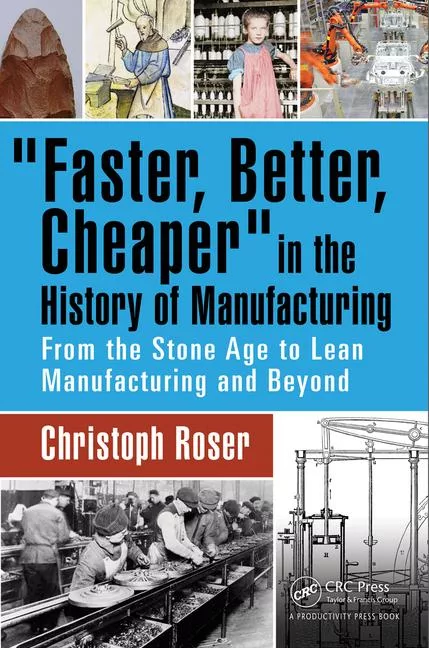
    Faster, Better, Cheaper in the History of Manufacturing: From the Stone Age to Lean Manufacturing and Beyond

  • digitalization.jpg

    The Digitalization of the 21st Century Supply Chain

  • foreman.jpg

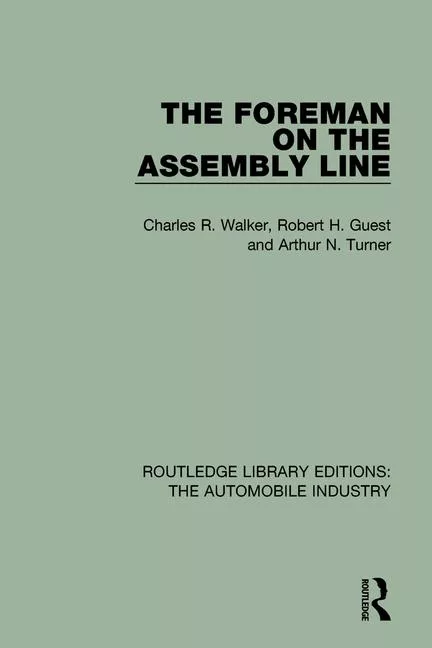
    The Foreman on the Assembly Line

See More Products
×

Never miss the latest news and trends driving the manufacturing industry

Stay in the know on the latest assembly trends.

JOIN TODAY!
  • RESOURCES
    • Advertise
    • Contact Us
    • Directories
    • Manufacturing Division
    • Store
    • Want More?
  • SIGN UP TODAY
    • Create Account
    • eMagazine
    • Newsletters
    • Customer Service
    • Manage Preferences
  • SERVICES
    • Marketing Services
    • Reprints
    • Market Research
    • List Rental
    • Survey/Respondent Access
  • STAY CONNECTED
    • LinkedIn
    • Facebook
    • Instagram
    • YouTube
    • X (Twitter)
  • PRIVACY
    • PRIVACY POLICY
    • TERMS & CONDITIONS
    • DO NOT SELL MY PERSONAL INFORMATION
    • PRIVACY REQUEST
    • ACCESSIBILITY

Copyright ©2026. All Rights Reserved BNP Media, Inc. and BNP Media II, LLC.

Design, CMS, Hosting & Web Development :: ePublishing