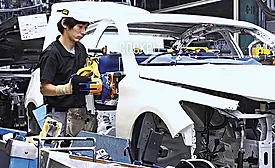
Automakers are scrambling to build a new generation of vehicles that are intelligent, connected and electrified. That’s forcing engineers to rethink how traditional assembly lines and production processes function.
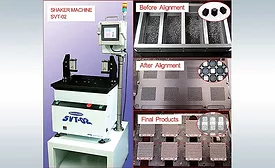
Consumers spend some $1 billion to buy 2 billion lightbulbs each year in the U.S. That’s more than 6 million every day. High-speed automated assembly is the only way to meet that kind of volume.
With so many ways to formulate plastic to get just the right combination of color, texture, strength and durability, it’s easy to forget how the parts will be assembled. However, if the parts will be assembled with screws, overlooking such parameters as thread style, driver speed and boss design could spell disaster on the assembly line.
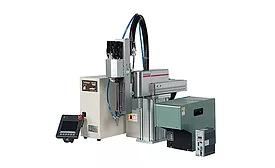
Clear polymer materials can be successfully bonded with a new process that combines simultaneous through-transmission infrared laser welding with precision ultrasonic spray deposition technology
Laser welding of plastic parts creates precise, high-quality, particulate-free joints for medical devices, consumer products and other assemblies. However, for the process to work, the laser light must pass through the top part to be absorbed by the bottom part. Welding a clear plastic part to another clear plastic part was not possible.
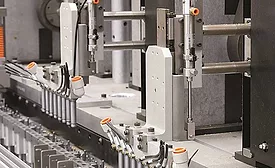
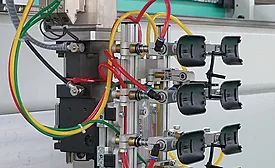
There are many ways to linearly move an object from point A to point B on an assembly line. But, not all of them are designed to optimize speed, accuracy and repeatability while performing the task.
For any plastic-injection-molding tooling company, nothing is more important than making sure its molds allow for consistent, quick and clean demolding of just-made parts. So anything that helps the company achieve this crucial goal is worth pursuing.
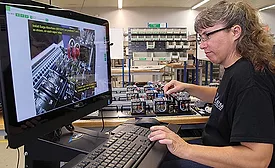
Nobody's perfect. Even the best trained, most experienced assemblers can make mistakes on the line, especially in high-mix production environments. Fortunately, a variety of software products are available to help prevent assembly errors.
Thermoelectric coolers are great for day trips, tailgating, boating or even overnight camping trips. Instead of ice, these coolers rely on a thin, flat electronic assembly called a Peltier device.