A surveillance camera in a retail store is designed to zoom in with laser-like precision to focus on people and merchandise. A race car is designed to handle crowded straightaways and steep turns with speed and agility.
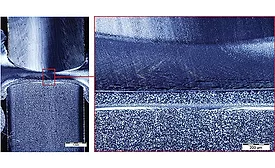
Engineers at a major manufacturer of portable electronic devices had a problem. They needed to rivet a small, thin electrical contact to the device’s charger subassembly, but how could they head the tiny rivets—0.02 to 0.03 inch in diameter—without crushing the assembly?
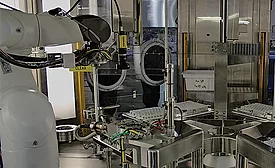
The advent of laboratory automation systems has made a significant impact on clinical diagnostics, drug discovery, food and agricultural research, and forensics.
JACKSONVILLE, FL—German medical device manufacturer KLS Martin Group is building its first U.S. assembly plant here. The new facility is expected to employ 25 people and focus on 3D printing and milling of products for reconstructive surgery.
PHOENIX—Dexcom is building a new assembly plant here to produce glucose monitoring devices. The 180,000-square-foot is expected to begin operation in 2017 and employ more than 500 people.
EAGAN, MN—Medical device startup Corvida Medical will spend $3.1 million to expands its assembly plant here, which produces closed-system drug transfer products.
This November marks 10 years that Thermo Fisher Scientific has been manufacturing, storing and delivering essential consumables to life-science researchers worldwide. Workers at Thermo Fisher’s global manufacturing and distribution center in Frederick, MD, fill orders by picking from thousands of unique stock keeping units (SKUs), including many products that must be preserved in a cooler or freezer.
SALT LAKE CITY—Medical device manufacturer Amedica Corp. has become the first company to make complex silicon nitride structures using a 3D printing process called robotic deposition, or robocasting.