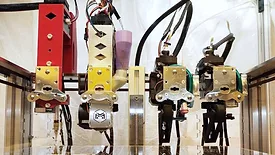

CAMBRIDGE, MA—Engineers at the Massachusetts Institute of Technology have developed a multimaterial additive manufacturing platform that can be used to print electric machines in a single step.
BIRMINGHAM, Mich. — Jeff Bezos is reportedly in early discussions to raise a $100 billion investment fund aimed at applying artificial intelligence across manufacturing, targeting sectors such as semiconductors, aerospace and defense.
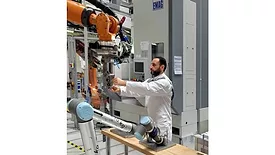
ITZEHOE, Germany—Engineers at the Fraunhofer Institute for Silicon Technology recently developed a system that enables close collaboration between humans and robots.
KANSAS CITY, Mo. — A new hands-on event in Kansas City will bring manufacturers together with AI developers to focus on applying artificial intelligence to real production and operational challenges.
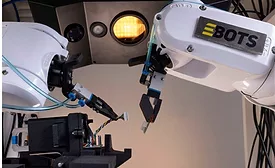
FREMONT, Calif. — Manufacturers have long automated repetitive, high-volume production tasks, but many assembly operations that require dexterity and adaptability have remained difficult to automate. eBots Robotics, a Silicon Valley-based company, is among those focusing on these applications. The company has developed dual-arm robotic systems designed to perform assembly work that traditionally required skilled human operators, particularly in industries such as electronics, semiconductors, medical devices and electric vehicles.
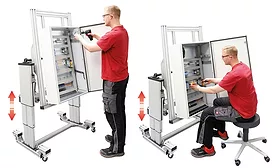
The work surface can be raised or tilted to suit each assembler or project.
March 30, 2026
MINDEN, Germany—The new RK Easymount mobile worktable from Rose + Krieger makes assembly of control cabinets easier, more efficient and more ergonomic. The table provides assemblers with a convenient work surface on which to keep tools and materials close at hand.
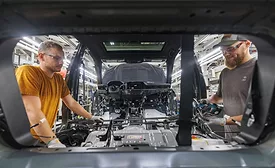
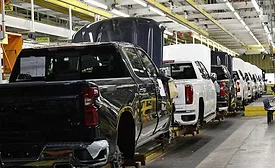
GEORGETOWN, Ky. — Toyota is investing $1 billion across its Kentucky and Indiana manufacturing operations to expand production capacity and support electrification, as the company marks 40 years of vehicle assembly in Kentucky.
NASHVILLE, Tenn. – A new manufacturing workforce study shows employees are highly satisfied and optimistic about the industry — but most did not plan to enter it, highlighting a growing “discovery gap” that continues to limit the talent pipeline.