Companies measure success in several ways. One of the most important measurements is their number of repeat customers. For wire harness shops, the best way to gain repeat customers is to provide them an ongoing supply of harnesses that are high quality, economical and specifically designed to meet each application challenge.
Automotive innovation is driven by environmental, safety and lifestyle requirements. This means manufacturers are putting more electronic content in their vehicles with ever-increasing numbers of electronic control units (ECUs).
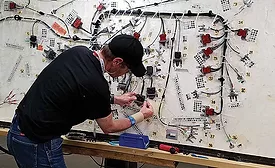
Wiring harnesses for complex assemblies, such as cars or airplanes, can contain hundreds or even thousands of wires. Routing all those wires from connector to connector is fraught with opportunities for error.
Cables, cord sets and wire harnesses are invariably assembled with at least some amount of manual labor, even when high volumes are needed. Sure, the process of cutting, stripping and terminating individual wires can be fully automatic.
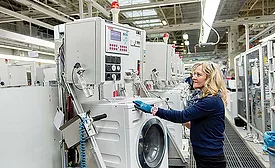
Based in Gutersloh, Germany, the Miele Group is one of the world's leading manufacturers of commercial and residential appliances. However, it didn't start out that way. Founded in 1899 by Carl Miele and Reinhard Zinkann, the company initially made cream separators for the dairy industry. Over the years, the company has manufactured butter churns, hand carts, bicycles and even automobiles.
The need for high-quality medical devices by doctors, patients and medical facilities is great. Because the need is also global, makers of such products are able to contract with the best wire-harness and cable-assembly manufacturers regardless of where they're located.
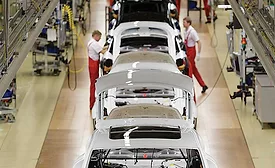
A typical Porsche sports car contains more than 2,000 individual wires. If laid end to end, the wiring would stretch 2 to 3 kilometers. Designing such a complex wiring system would be challenge enough, but at Porsche, almost no harness design in series production matches another one.
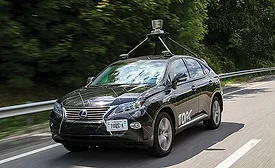
The automotive industry is undergoing the biggest transformation in its 130-year history. Automakers and suppliers around the world are scrambling to develop autonomous vehicles. And, they’re under increasing pressure from outsiders ranging from Silicon Valley tech giants to startup entrepreneurs.
Commercial protocols in aerospace applications present designers with the challenge of balancing the standard against the special needs of the application.
Taking tests and waiting with hope for positive results is a stressful activity that most people perform only when absolutely necessary. For wire-harness assemblers, it’s a daily challenge.