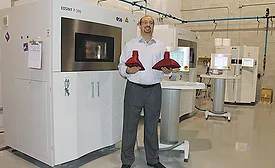
Necessity is the mother of invention, or so the proverb goes. Such was the case recently at The Langen Group, a manufacturer of automated packaging equipment in Mississauga, ON.
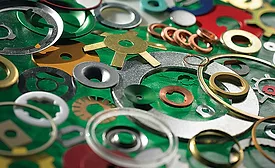
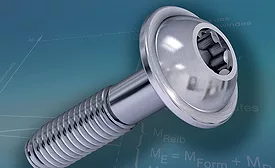
Washers are a vital component of many fastened joints. Washers are critical to the operation of virtually every device with moving parts. They perform a variety of functions beyond just securing bolts, nuts, screws and rivets. They can insulate, seal, lock, provide spacing, improve appearance, supply spring force, align parts, and distribute loads.
When an assembly process proves to be even a tad too costly—even a penny or less per cycle—a cheaper alternative must be found. This is why many manufacturers have replaced die-cut or molded solid gaskets with form-inplace (FIP) and cure-in-place (CIP) liquid gaskets.
For the last 100 years, dryers, ovens, refrigerators, washing machines and other household appliances have performed the same basic functions, such as keeping food hot or cold and getting clothes wet and dry. But, a new breed of “smart” appliances is emerging, thanks to advanced sensor technology and the Internet of Things (IoT).
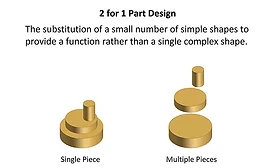
In the early 1980s, a product design methodology called design for assembly (DFA) began to gain popularity. It focused on improving efficiency by evaluating the amount of labor required for assembly. Since that time, the DFA methodology has been adopted with much success by more than 850 corporations.
Efforts to reduce vehicle weight have mostly focused on aluminum, plastics and composites, but another lightweight material is also getting attention: magnesium. The ninth most abundant element in the universe, magnesium is as strong as steel, but 33 percent lighter than aluminum, 60 percent lighter than titanium, and 75 percent lighter than steel.
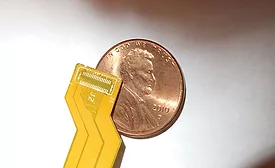
Whether fully automatic, semiautomatic or manual, almost every assembly system has some type of sensor for inspection, error-proofing or production monitoring. Thanks to new technologies, sensors are becoming smaller, more robust, more accurate and easier to integrate.
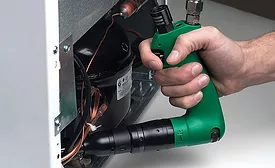
If we are to build a better world, politicians tell us, power must be placed in the right hands. This statement will draw no protest from assemblers. After all, these skilled workers require state-of-the-art power tools to build long-lasting quality products on a daily basis.
Wearable electronics initially trickled into the market with Dick Tracy-inspired watches and healthcare bracelets. They quickly gained momentum, however, and it wasn’t long before the wearables market exploded.
 RSS
RSS