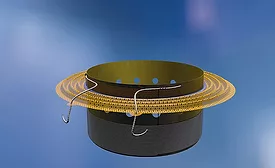
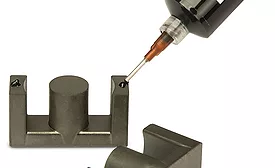
The loudspeaker market is booming. In addition to designing to an outstanding product, efficient production is crucial for a speaker manufacturer to stay ahead of its competitors. Adhesives play an important role in this, but the potential they offer for increasing productivity has yet to be fully realized.
Construction equipment, farm tractors and other off-highway machines need more than just diesel engines, big tires and metal tracks to operate. They require hydraulic mechanisms to steer, raise booms, open buckets or tilt blades.
No matter which method is used, the goal is low production costs and a quality end product.
October 1, 2016
Design engineers consider a number of factors when deciding which joining method is best suited to a particular application. Each has pros and cons, and this article will look at some of the reasons behind the choices for one over the other.
Walk into any modern assembly and packaging facility, and the conveyor systems may very well resemble roller coasters at an amusement park—going up steep inclines, moving down drops, and twisting and turning around equipment and machinery as they transfer product from one area of the plant to another.
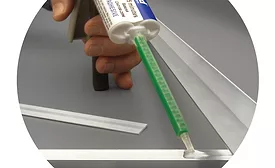
High-tech adhesives are very reliable, and problems do not occur often. When used correctly, adhesives can resolve many design issues while also saving money, time and effort.
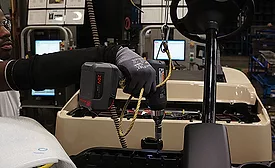
Quality and innovation have been the name of the game at Club Car ever since the company was founded in 1958. Today, the company produces 40 base models of golf, utility and transportation vehicles.
Incompatible thermoplastic polymers can be welded by using polymer blends that are compatible with both components.
September 8, 2016
Ideally, every component in a plastic assembly would be made from the same material. However, cost, functional and aesthetic requirements often dictate that a mix of materials be used.
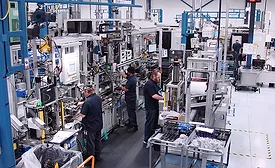
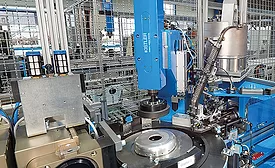
Multistation automated assembly systems are a wonder to behold. A well-designed system can mass-produce hundreds of assemblies per minute with minimal human intervention.
Needing more precision, energy efficiency and traceability data from their assembly presses, manufacturers are increasingly turning to servo-driven models.
When an assembly press supplier meets with a manufacturer to discuss its next purchase, both parties focus on one question: Which type and model of press is best for the current application? Mike Brieschke, vice president of sales at Aries Engineering Corp., recalls how two such meetings in 2006 with automotive OEMs led the supplier to ask itself another question: Which type of press is best for the future of assembly?
 RSS
RSS