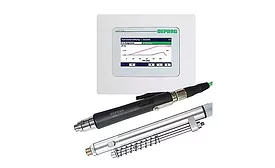
Threaded fasteners are, by far, the most common method of assembling parts. According to ASSEMBLY magazine's annual Capital Equipment Spending Survey, screwdriving is performed at 58 percent of U.S. assembly plants, making it more popular than welding, pressing, adhesive bonding or riveting.
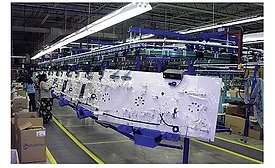
The shop floor was hopping in mid-January at Dukane Corp.'s headquarters in St. Charles, IL, 35 miles west of Chicago. Technicians were busy assembling, tooling and testing a variety of machines, including the latest product in the company's arsenal of plastics assembly technologies: a hot-gas welding system.
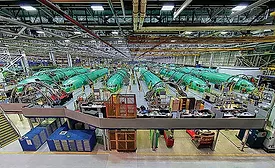
Materials are important in every industry. But, they're critical to aerospace manufacturers. If companies select the wrong material for a particular application, it can have catastrophic consequences.
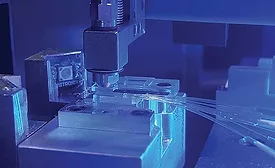
Optical fiber is the backbone of today's digital economy. Global financial transactions, high-speed Internet access, online shopping, video gaming and other things that most people take for granted are possible because of thin strands of glass that transmit massive amounts of data every second.
Industry 4.0 and the digital manufacturing revolution are all about collecting - and, more importantly, acting on - data gathered from the assembly process in real time.
Science writer John Wilford once observed that his articles had to focus on one of these story lines to earn their way into print: "big bang, big bucks, big screwup, or big comeback - and with the Hubble Space Telescope you've got them all." He was right. Since launching into orbit almost 30 years ago, Hubble has gone from the humiliation of "techno turkey" to high-risk recovery to recognition as one of history's most prolific scientific explorers.
Every manufacturer has one want and many needs. The want is universal, to be the leader in its industry or area of specialty. The needs are individual, and may concern issues as diverse as increasing capital, upgrading technology, expanding plant size or hiring more assemblers.
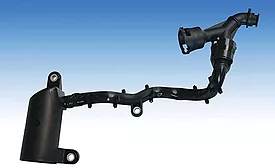
Selecting the automated dispensing technology that is the best fit for a specific application is not a decision to be made lightly. This is understandable in light of the many technologies that are available, including the progressive cavity pump, auger valve, time-pressure valve and pneumatic jet valve.
There are many ways to crimp or flare a lip on a cylindrical part. For example, it can be done with a press or an orbital forming machine. However, the problem with those processes, particularly the former, is that they require a good deal of force.
In all industries, it's important to achieve alignment between the design of a product and production processes as early as possible. In the medical device sector, whether it's a dialysis machine, a knee implant, a stethoscope or a syringe, the design transfer process plays a critical role in addressing cost and quality issues.
 RSS
RSS